
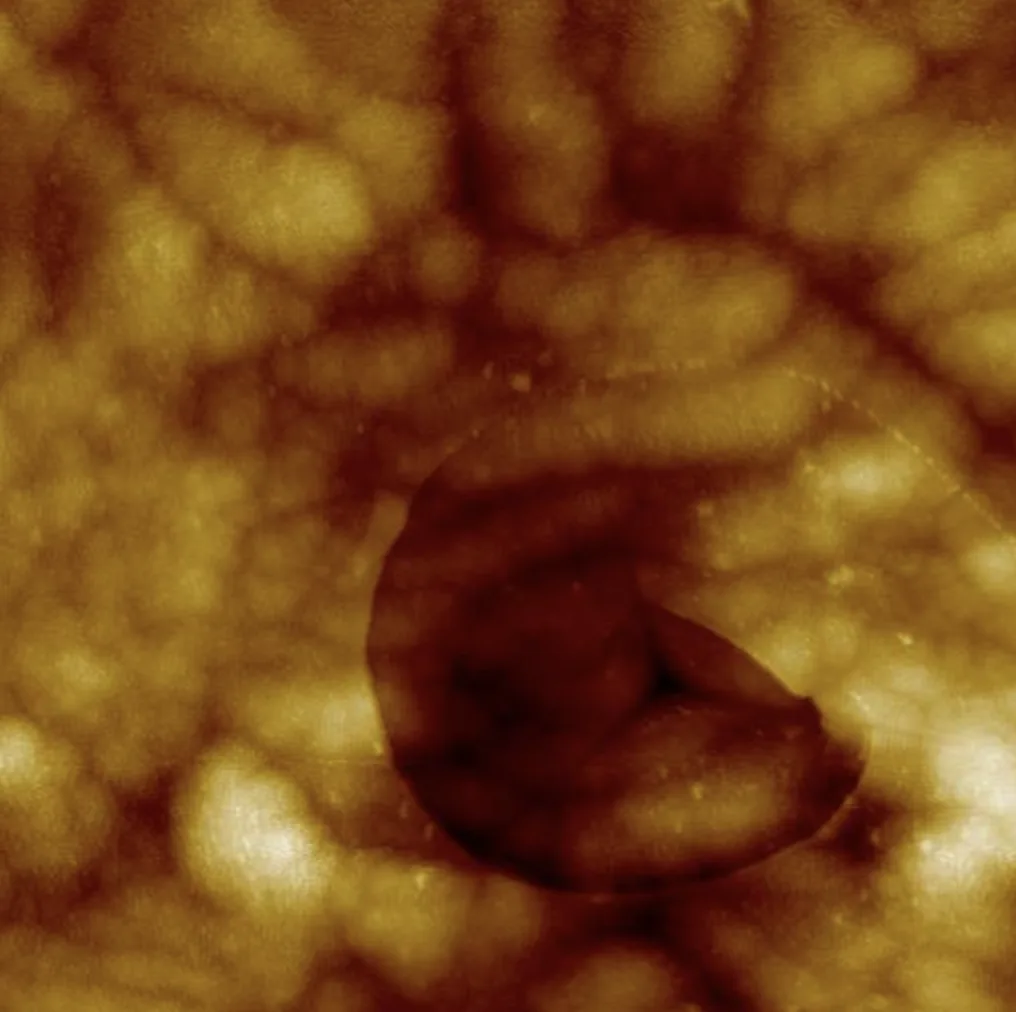
Application fields
Key Features
Nano-Indentation Mode
- Quantitative Analysis: Measure hardness, elasticity, and other mechanical properties at the nanoscale.
- High Precision: Achieve sub-nanometer displacement resolution and picoNewton force sensitivity.
- Wide Applicability: Suitable for soft and hard materials, including biomaterials, polymers, and metals.
- Depth Control: Accurately control penetration depth to avoid substrate effects.
- Real-Time Data: Immediate feedback on material response during indentation.
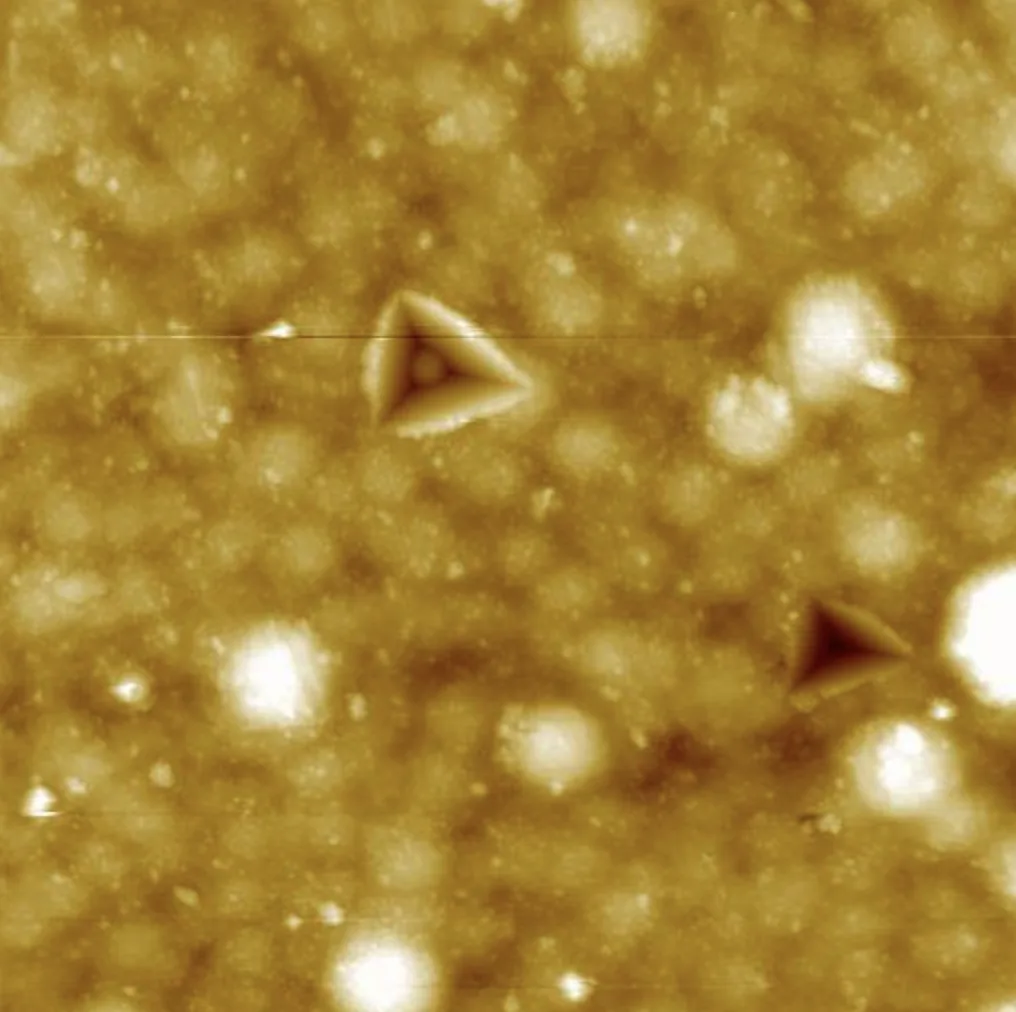
Applications of Nano Indentation
Materials Science
- Measure hardness and elasticity in coatings and thin films.
- Analyze mechanical properties of advanced composites.
Polymers
- Study viscoelastic properties and creep behavior.
- Optimize formulations for enhanced performance.
Biological Samples
- Characterize cell stiffness and tissue mechanics.
- Investigate biomaterial elasticity for medical applications.
AAC Sample & Nano Indentation Mode
Advanced Nano Indentation with Nano-Observer Series AFM
The Nano-Observer Series AFM provides unparalleled capabilities for Nano Indentation, including advanced force control, real-time data acquisition, and customizable probe options.
- High Precision Force Control: Ensures accurate application of forces to avoid sample damage.
- Customizable Probes: Tailor measurements for specific applications, from soft biomaterials to hard coatings.
- Real-Time Feedback: Monitor material response during indentation for dynamic studies.
How does Nano Indentation Mode work?
Nano Indentation operates by applying a controlled force to a sample using a sharp AFM probe. The resulting displacement provides valuable data on mechanical properties such as Young’s modulus, hardness, and viscoelastic behavior.
The Nano-Observer Series AFM ensures precise force application and displacement measurements for reliable data.
Specifications
- Force Range: From picoNewtons to microNewtons.
- Displacement Resolution: Sub-nanometer scale.
- Tip Geometry: Standard and custom probe designs for various materials.
- Sample Types: Thin films, polymers, composites, and biological samples.
- Environments: Ambient, liquid, or controlled atmospheres.
Questions about Nano Indentation?
Ask the application scientists behind our AFMs and modes — about your samples, probes, set-up or which mode fits your measurement. We answer every message personally.