
Application fields
Key Features
Liquid AFM
- Versatile Compatibility: Works with both contact and resonant AFM modes
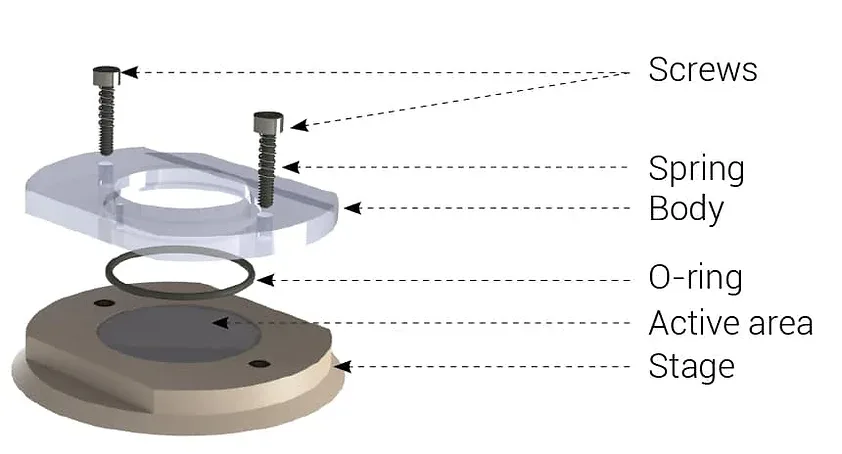
- Specialized Design: Custom liquid cell and tip holder for optimal performance
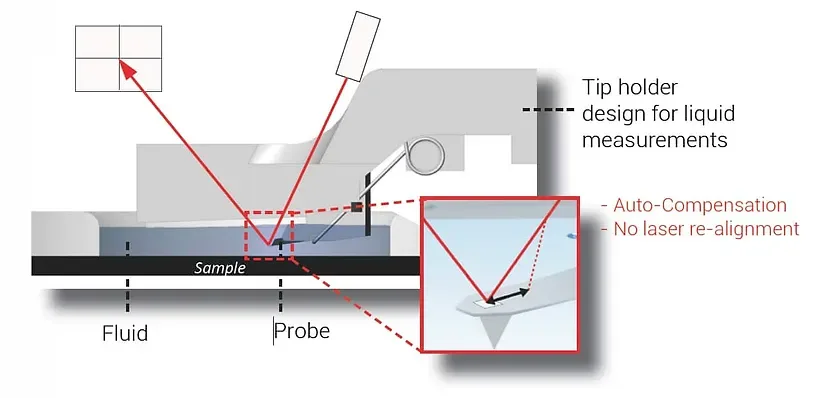
- Laser Angle Compensation: Maintains alignment when the cell is filled with liquid
- Minimal Evaporation: Clever design reduces liquid loss during long experiments
- Electrochemistry Ready: Optional connector for bi-potentiostat integration
- Easy Setup: Simple laser/photodetector alignment process
Benefits of Liquid AFM
- Laser Angle Compensation: Ensures optimal signal detection in liquid
- No Additional Laser Re-positioning: Simple setup process saves time
- Long-term Stability: Achieve extended imaging sessions in resonant mode
- Minimal Drift: Reduced evaporation for stable long-duration experiments
- Versatile Applications: From biology to materials science and electrochemistry
- Easy Integration: Designed specifically for the Nano-Observer I and II
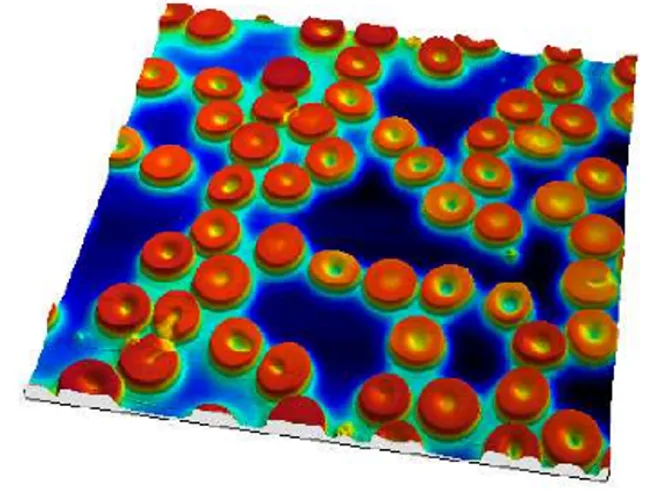
80µm scan
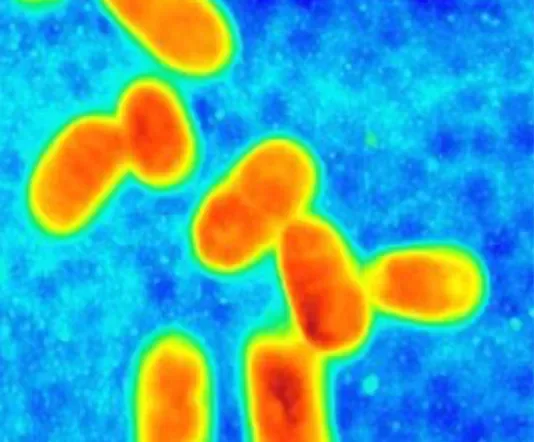
Nano-Observer II and EZLiquids accessory, details bacterial structures in a 4.5×4.5 micron liquid environment.
Specifications and Working Principle
Seamless Integration for Glovebox Research with Nano-Observer II and EZTemperature
Specifications
- Temperature Range: -40°C to 300°C
- Active Zone: Ø25mm
- Maximum Sample Height: 4mm
- Temperature Precision: 0.1°C
- Compatibility: All AFM modes
Application Fields
Biology
- Study living cells in their native environment
- Investigate biomolecules and cellular structures in physiological conditions
- Perform force spectroscopy on biological samples
Materials Science
- Analyze surface properties in liquid media
- Study corrosion processes in real-time
- Investigate liquid-solid interfaces
Electrochemistry
- Conduct in-situ electrochemical AFM experiments
- Study electrode surfaces during reactions
- Analyze electrocatalytic processes at the nanoscale
AFM in liquid
Imaging biological and polymer samples in liquid
Cells, biomolecules, polymers and electrode surfaces often have to be measured in liquid, in conditions close to their real environment. The EZ Liquids accessory turns the Nano-Observer II and Nano-Observer AFMs into liquid AFMs:
- Contact and resonant modes in liquid — a dedicated liquid cell and tip holder.
- No re-alignment — laser angle compensation keeps the laser on the photodiode when the cell is filled.
- Long, stable sessions — the cell limits evaporation, for long resonant-mode imaging with little drift.
- Biology — living cells, biomolecules and force spectroscopy in physiological conditions; bacterial structures imaged in liquid on a 4.5 µm scan, DNA on mica and blood cells.
- Materials and electrochemistry — surfaces in liquid media, corrosion in real time and electrochemical AFM with an optional bi-potentiostat connection.
FAQ
Frequently Asked Questions
Which AFM can image biological samples in liquid?
The Nano-Observer AFMs with the EZ Liquids accessory image cells, biomolecules and bacteria in liquid, in contact and resonant modes, with laser angle compensation and reduced evaporation for long, stable sessions.
Which AFM modes work in liquid?
Contact mode and resonant (tapping) mode, as well as force spectroscopy on biological samples and electrochemical AFM with an optional bi-potentiostat.
Can polymer or material surfaces be measured in liquid?
Yes. The liquid cell is used to analyse surfaces in liquid media, to follow corrosion processes in real time and to study liquid–solid interfaces.
Questions about AFM in liquid?
Ask the application scientists behind our AFMs and modes — about your samples, probes, set-up or which mode fits your measurement. We answer every message personally.