
Application fields
Key Features
MFM Mode
- High Sensitivity: Detect even the weakest magnetic domains and structures
- Excellent Spatial Resolution: Achieve lateral resolution down to 20 nm
- Non-Destructive Imaging: Ideal for studying sensitive magnetic samples
- Quantitative Measurements: Map relative strengths of magnetic fields across surfaces
- Integration with Other Modes: Combine MFM with electrical or mechanical property mapping
Benefits of MFM Mode
- Superior Resolution: Our advanced MFM implementation offers unparalleled spatial resolution and sensitivity.
- User-Friendly Interface: Intuitive software makes MFM accessible to both experts and beginners.
- Versatility: Easily combine MFM with other AFM modes for comprehensive sample characterization.
- Cutting-Edge Research: Stay at the forefront of magnetic nanoscale characterization with our continuously updated technology.
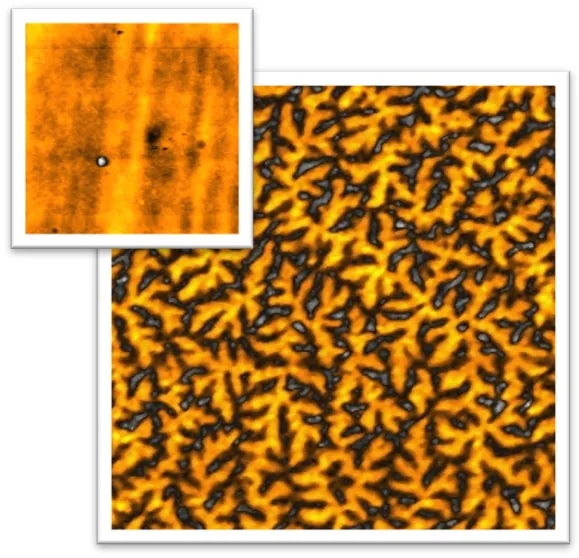
Scan size 30µm x 30 µm
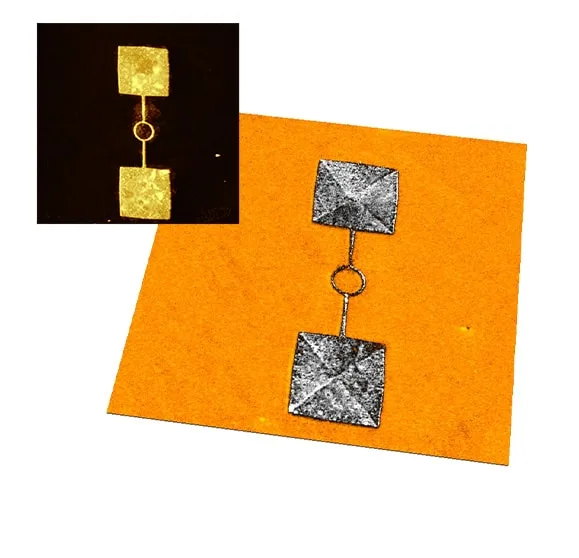
Scan size 24 µm x 24 µm
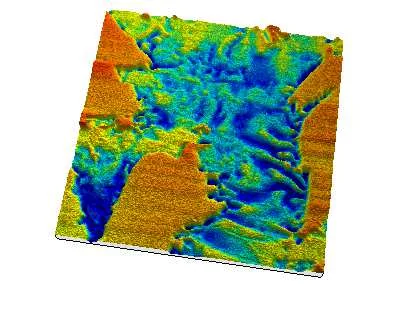
Scan size 18 µm x 18 µm
How does MFM work?
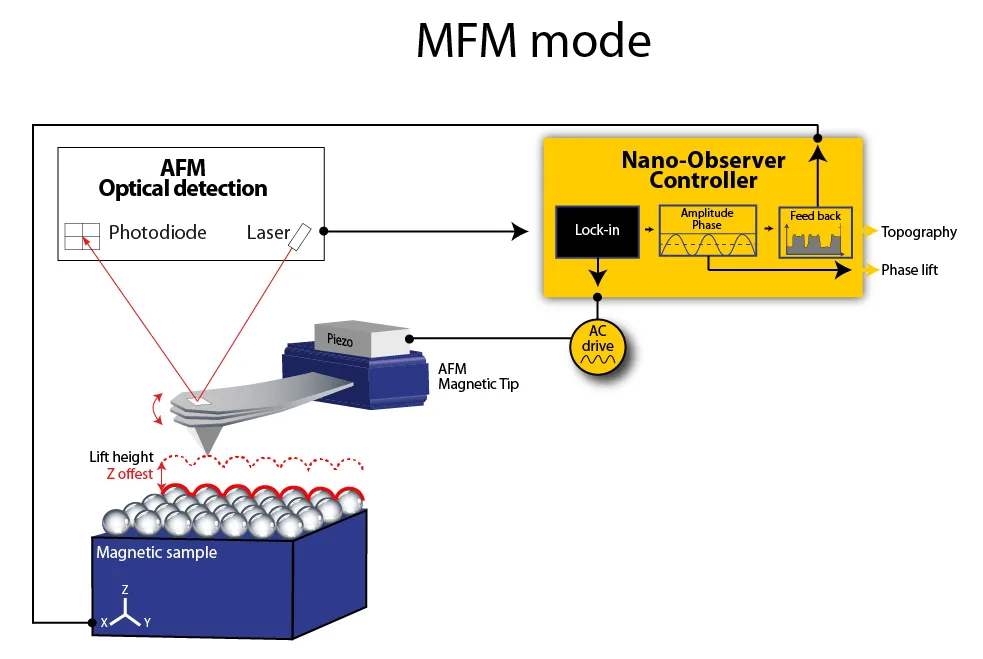
MFM operates as a two-pass scanning technique:
- Topography Scan: A magnetically coated tip first scans the surface to record topography in tapping mode.
- Lift Mode: The tip is then raised to a specific height above the sample (typically 20-100 nm).
- Magnetic Force Detection: As the tip follows the topography at this constant height, it detects long-range magnetic forces.
- Data Recording: The system records the phase shifts of the cantilever oscillation, which correspond to the magnetic force gradient.
This two-pass technique allows for separate optimization of topographical and magnetic measurements, ensuring high-quality data for both.
Specifications
- Lift Height Range: 10 nm – 200 nm
- Lateral Resolution: < 20 nm (tip-dependent)
- Compatible with all CSInstruments AFM systems
- Optional: Variable magnetic field module for in-situ studies
Application Fields
Data Storage
- Characterization of magnetic recording media
- Analysis of bit patterns in hard drives
- Development of next-generation magnetic storage technologies
Semiconductor Industry
- Inspection of magnetic sensors and MEMS devices
- Failure analysis in magnetic components
Materials Science
- Study of magnetic domain structures in various materials
- Investigation of magnetic thin films and multilayers
- Characterization of novel magnetic nanomaterials
Spintronics
- Research on spin-dependent transport phenomena
- Development of spintronic devices
Geoscience
- Analysis of magnetic properties in geological samples
- Study of magnetic inclusions in minerals
Choosing an AFM for MFM
What makes a good AFM for magnetic force microscopy
MFM measures the long-range magnetic force gradient with a magnetic tip lifted above the surface. The quality of the image depends on the resolution, on keeping electrostatic forces out of the magnetic signal, and on being able to change the magnetic field while imaging. On the Nano-Observer AFMs from CSInstruments:
- Resolution — lateral resolution below 20 nm (tip-dependent), lift height adjustable from 10 to 200 nm.
- Pure magnetic contrast — EFC (electric field cancelling) removes the electrostatic tip–sample interaction, so the MFM image shows magnetism only.
- Magnetic and electrical in one scan — MFM combined with HD-KFM™ surface potential on the same area.
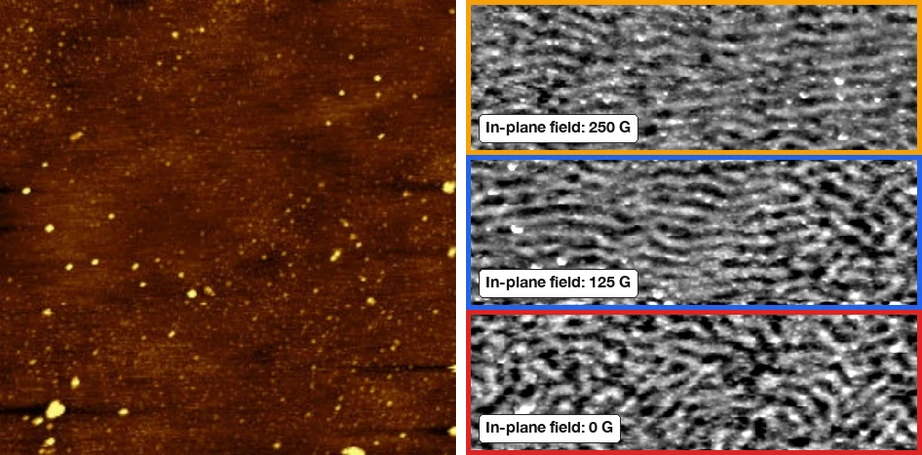
- Field-dependent imaging — the Variable Magnetic Field Module applies an in-plane or out-of-plane field (up to 3000 G in plane) during the scan, without current-induced sample heating, to follow domain switching.
- Existing AFMs — MFM is kept when a MultiMode or Agilent AFM is upgraded with the Galaxy Dual Controller, which also adds HD-KFM™.
MFM results
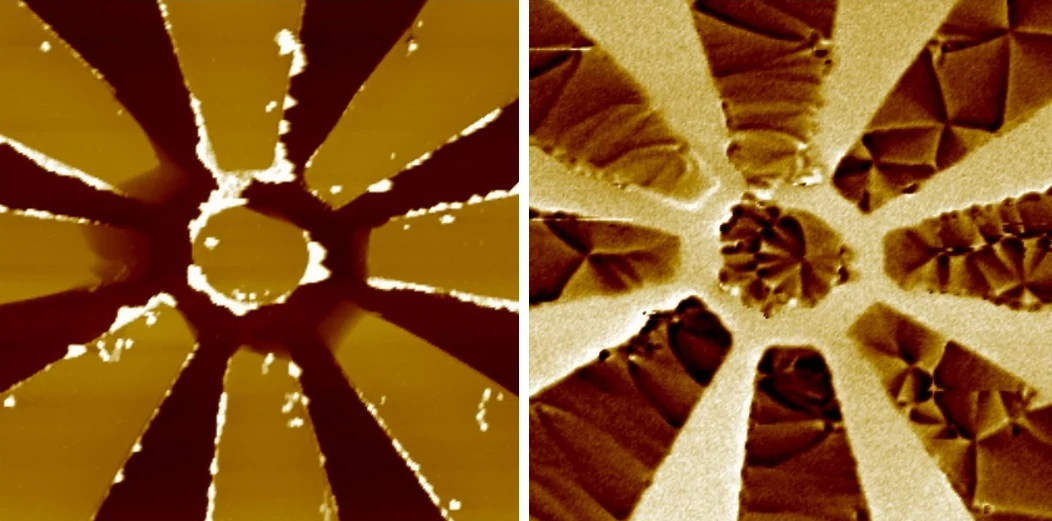
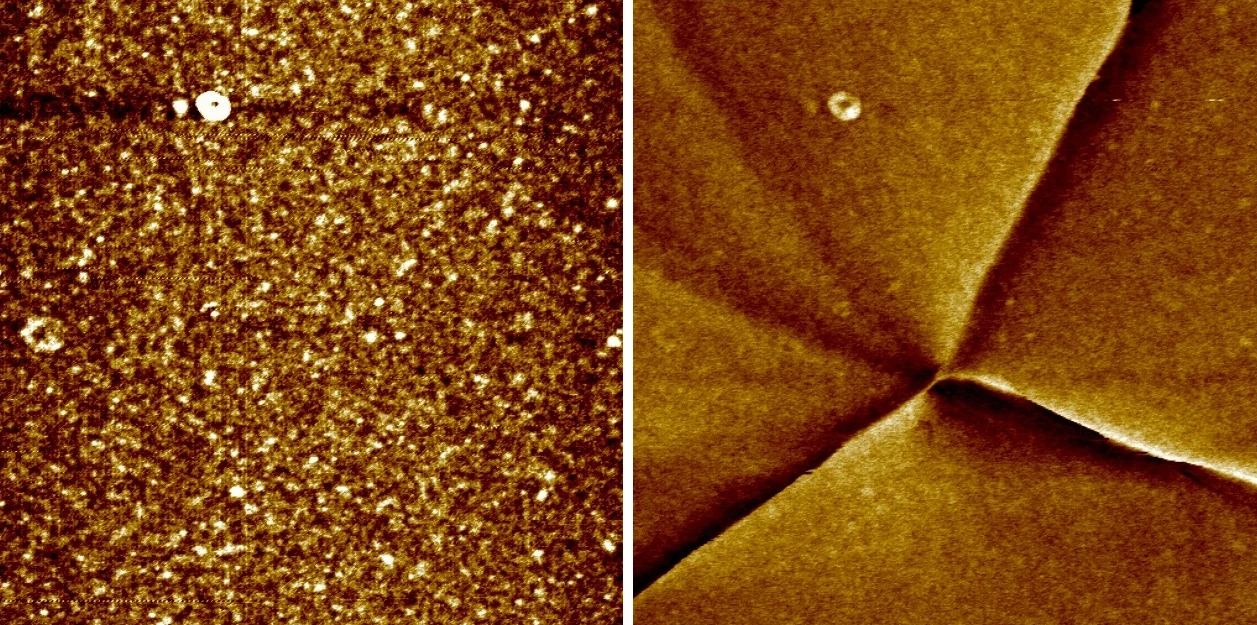
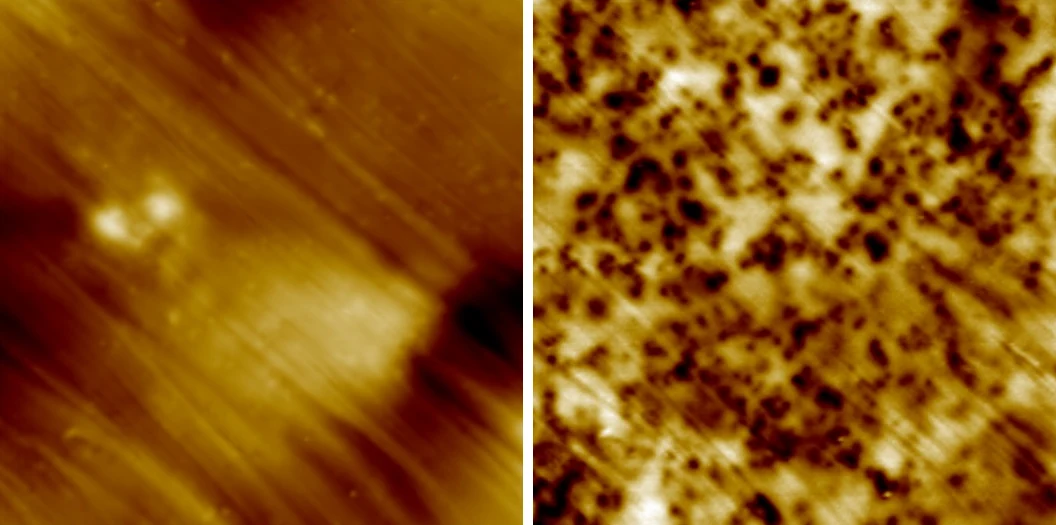
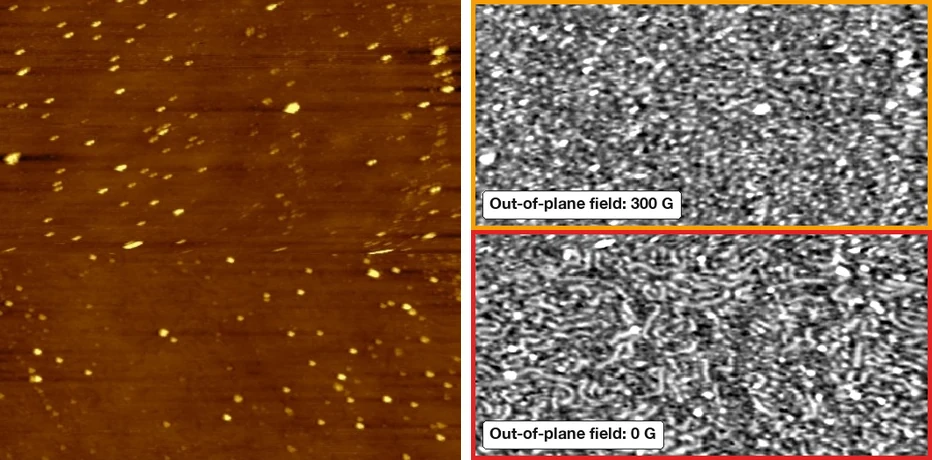
Application note
MFM under an applied magnetic field
Domain rotation from 50 to 470 G and field steps within a single scan, in plane and out of plane: read the VMFM application note.
FAQ
Frequently Asked Questions
What is the best AFM for magnetic force microscopy (MFM)?
One that combines high resolution with control of the electrostatic and magnetic environment. The Nano-Observer AFMs reach below 20 nm lateral resolution in MFM (tip-dependent), cancel electrostatic forces with EFC, combine MFM with HD-KFM surface potential and can image under a variable magnetic field with the VMFM module.
How are electrostatic artefacts removed from MFM images?
With EFC (electric field cancelling): the electrostatic tip–sample interaction is cancelled during the MFM pass, so the image shows only the magnetic contrast.
Can magnetic domains be imaged while a magnetic field is applied?
Yes. The Variable Magnetic Field Module applies an in-plane or out-of-plane field (up to 3000 G in plane) during MFM imaging, without current-induced heating of the sample, so domain switching can be followed in situ.
Questions about MFM Mode?
Ask the application scientists behind our AFMs and modes — about your samples, probes, set-up or which mode fits your measurement. We answer every message personally.