
Images
Videos
FAQ
Frequently Asked Questions
What AFM modes are best for polymer characterization?
For polymer characterization, the most commonly used AFM modes are: Resonant (Tapping) Mode for non-destructive topography and phase imaging of soft polymer surfaces — phase contrast reveals hard/soft domain separation in blends and copolymers without staining; Soft Intermittent Contact (Soft-IC) Mode for quantitative mechanical property mapping (stiffness, adhesion, Young's modulus) on viscoelastic polymers where standard contact mode causes damage; Soft ResiScope™ for friction-free electrical characterization of conductive polymer films and composites; and temperature-controlled AFM with Peltier or heating stage for in-situ crystallization, glass transition, and melting studies. The Nano-Observer II supports all of these modes in a single platform.
Can AFM measure polymer crystallization in real time?
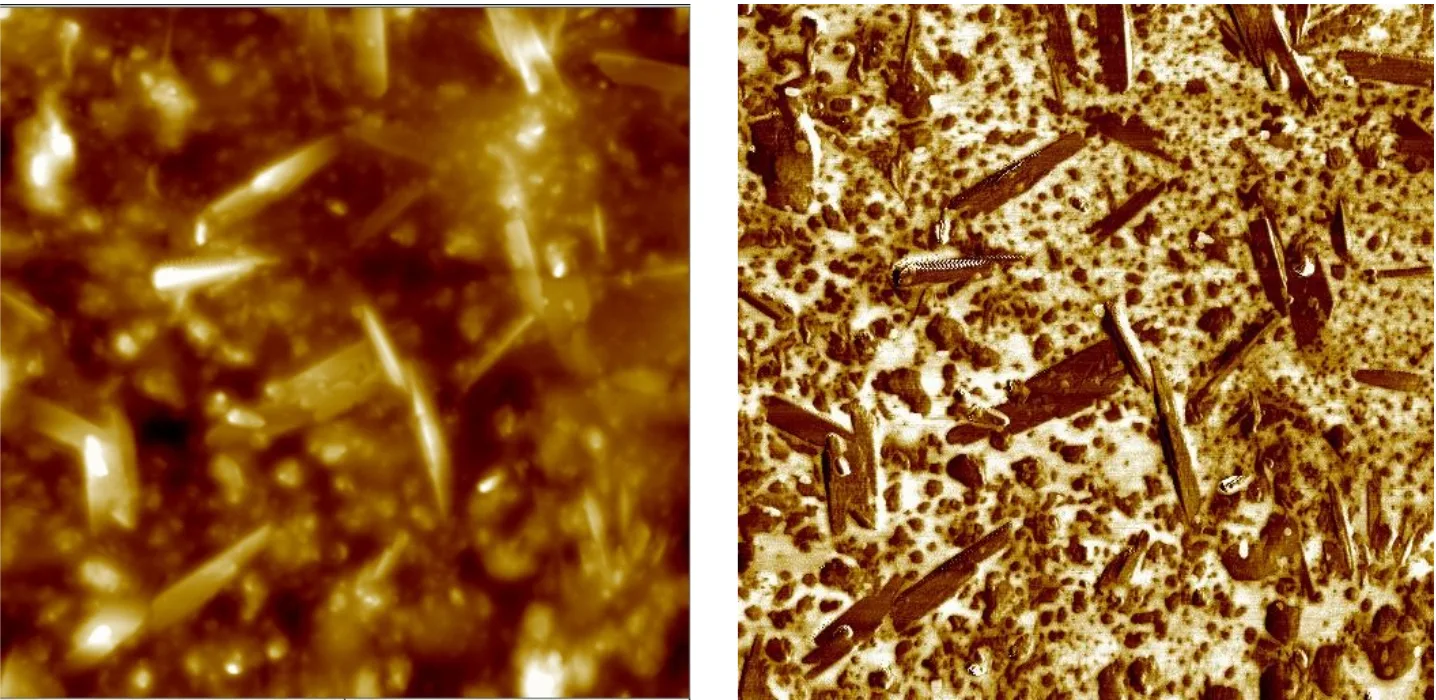
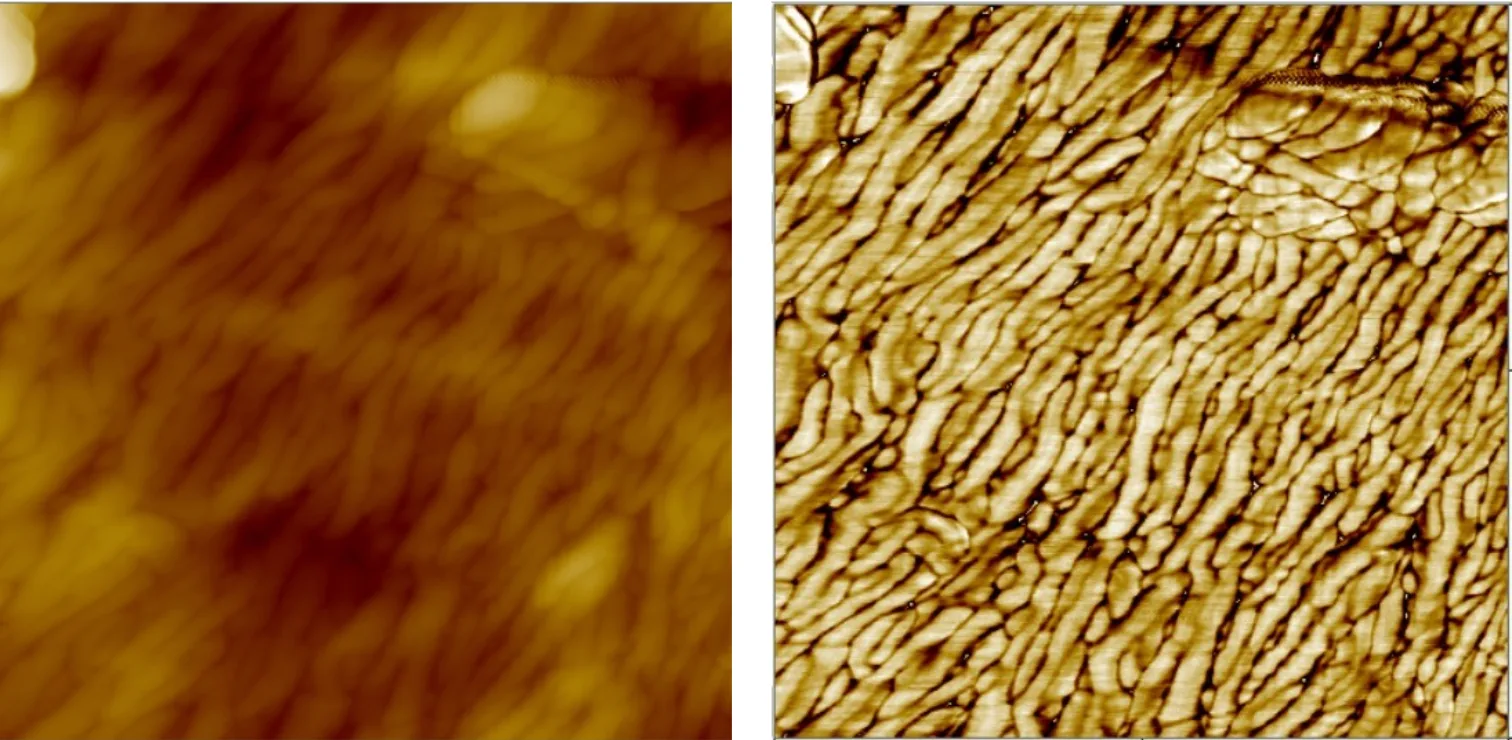
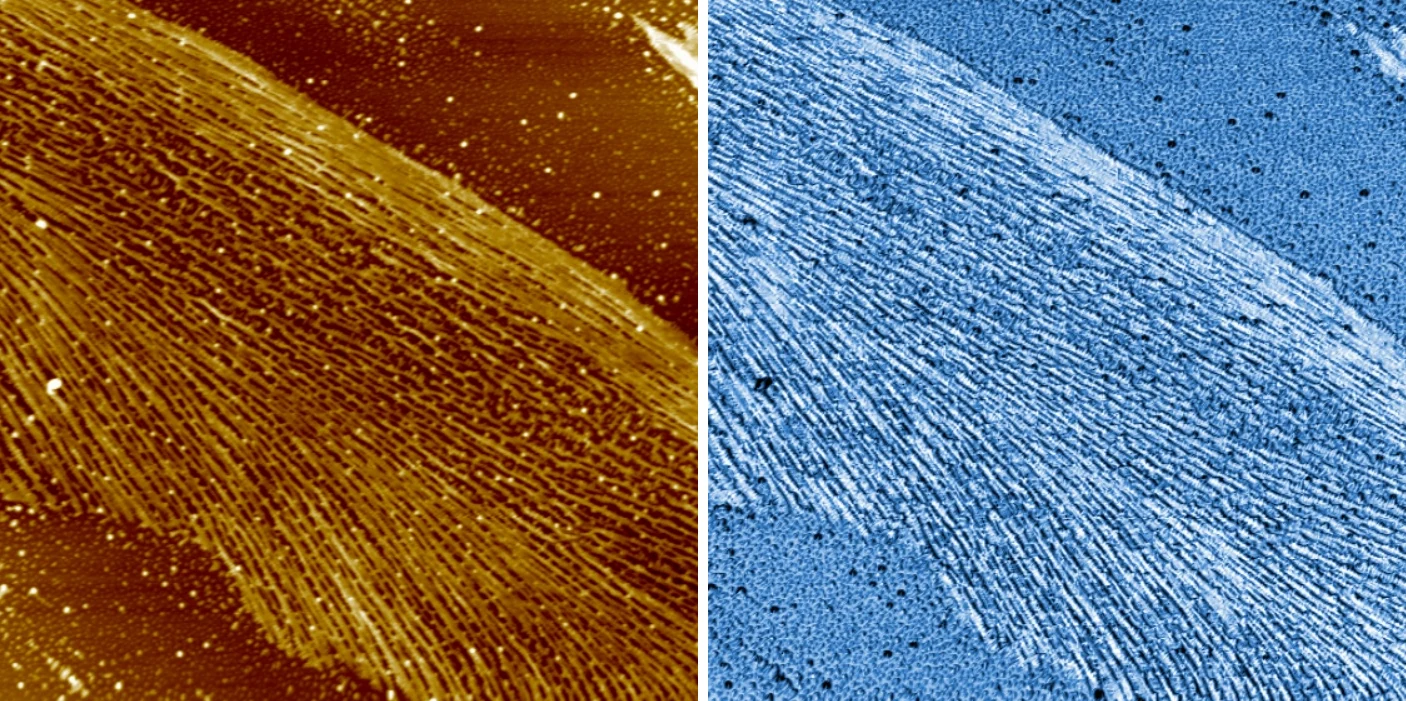
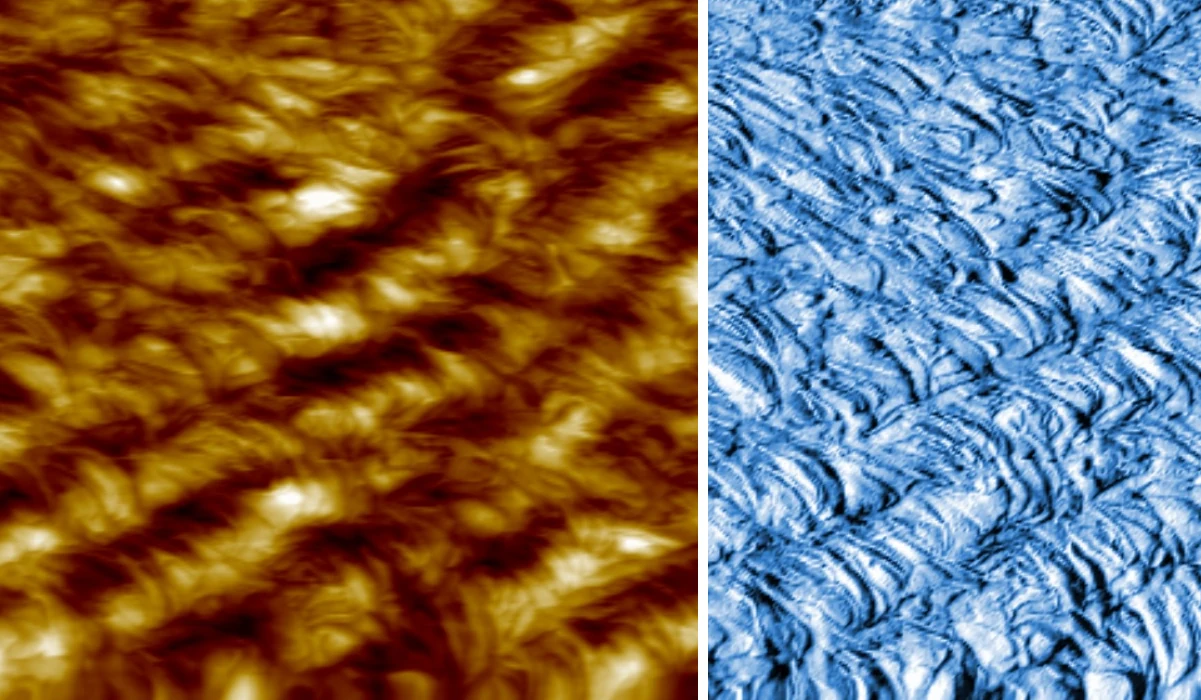
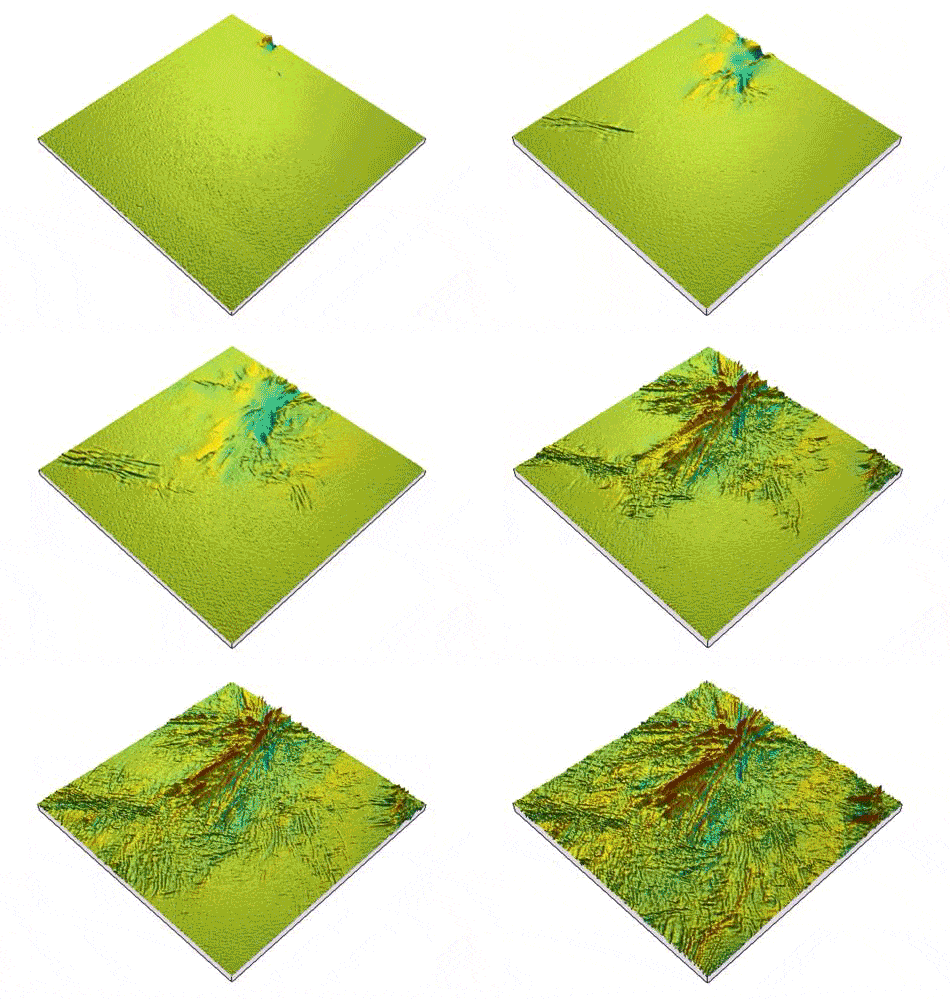
Yes. The Nano-Observer AFM with a temperature-controlled stage (Peltier or heating module, range –40°C to 450°C) enables real-time in-situ observation of polymer crystallization. As temperature decreases from the melt, AFM topography images capture the nucleation and growth of crystalline domains — spherulites, lamellae, or dendrites — at the micron scale. PCL (polycaprolactone) crystallization has been directly imaged on the Nano-Observer, showing the transition from a smooth amorphous surface at 60°C to micron-scale spherulitic and lamellar crystals as temperature decreases.
How does AFM characterize polymer blends and phase separation?
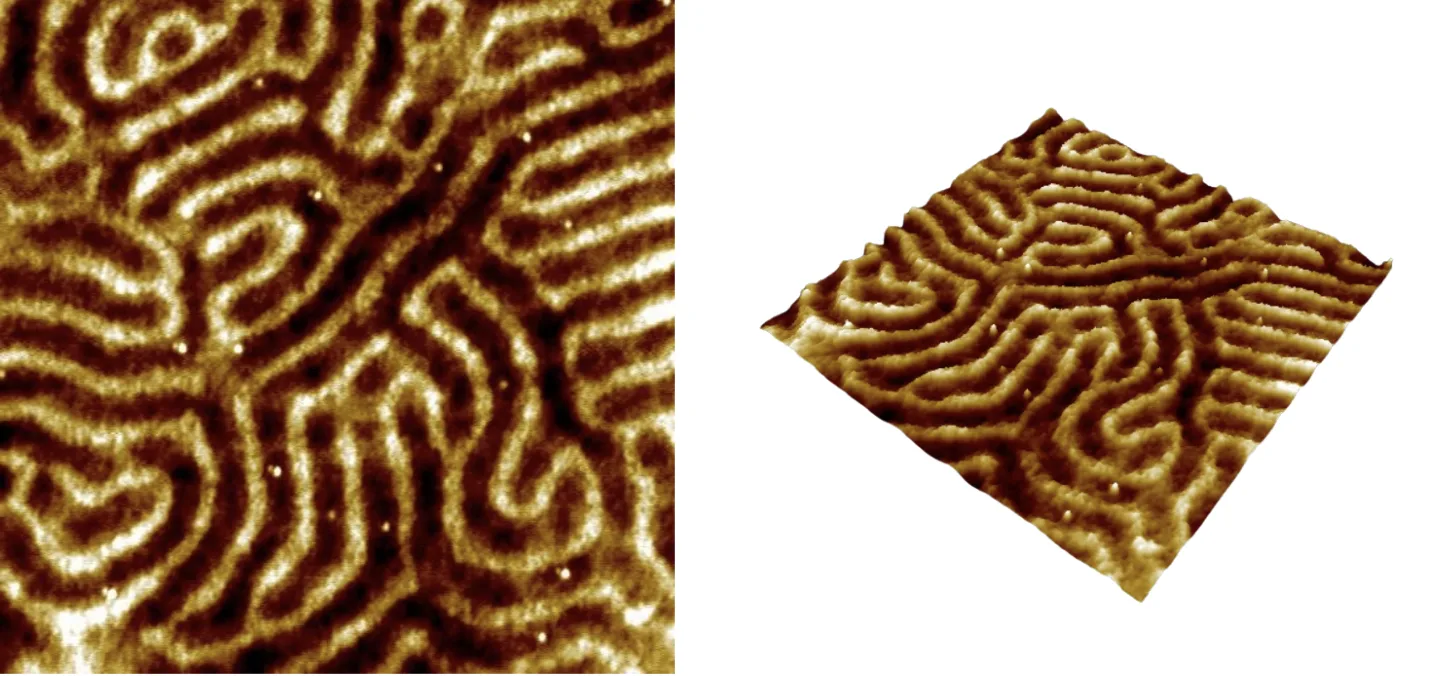
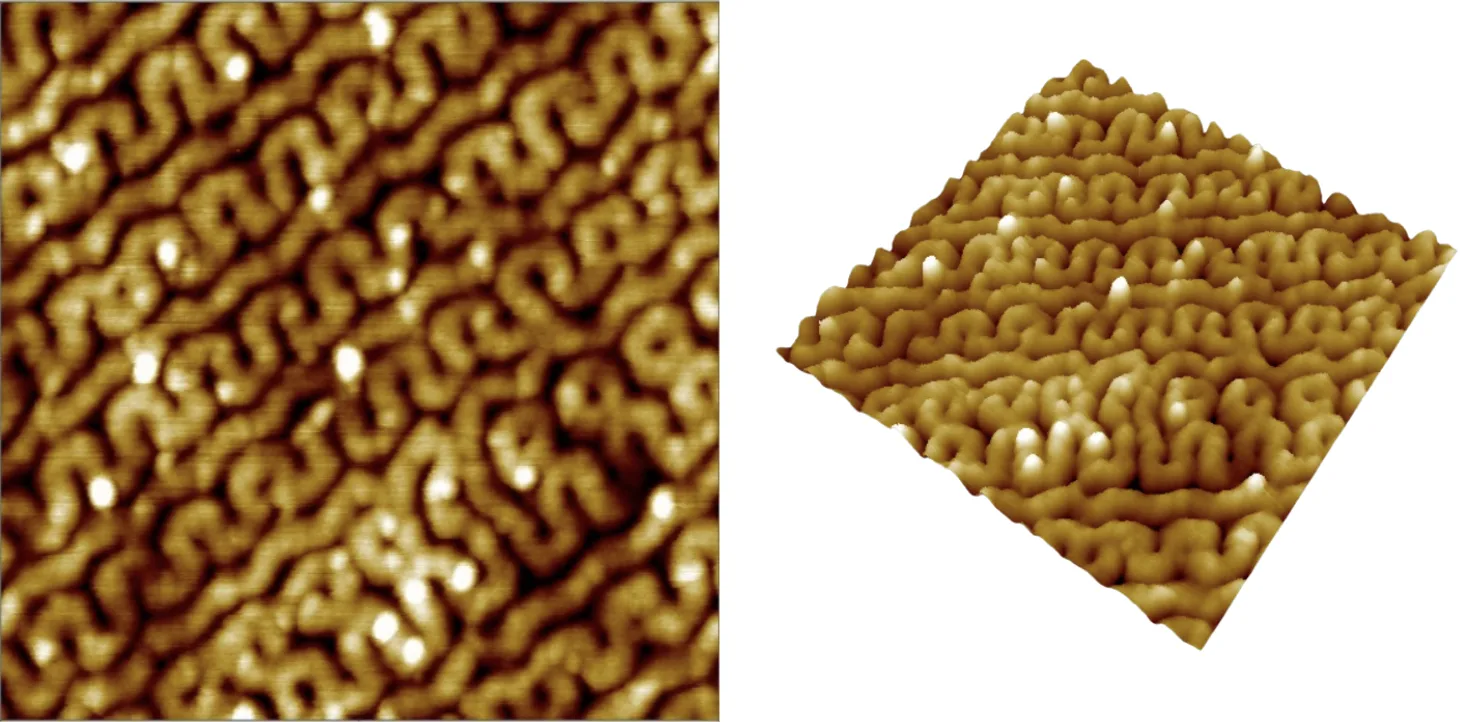
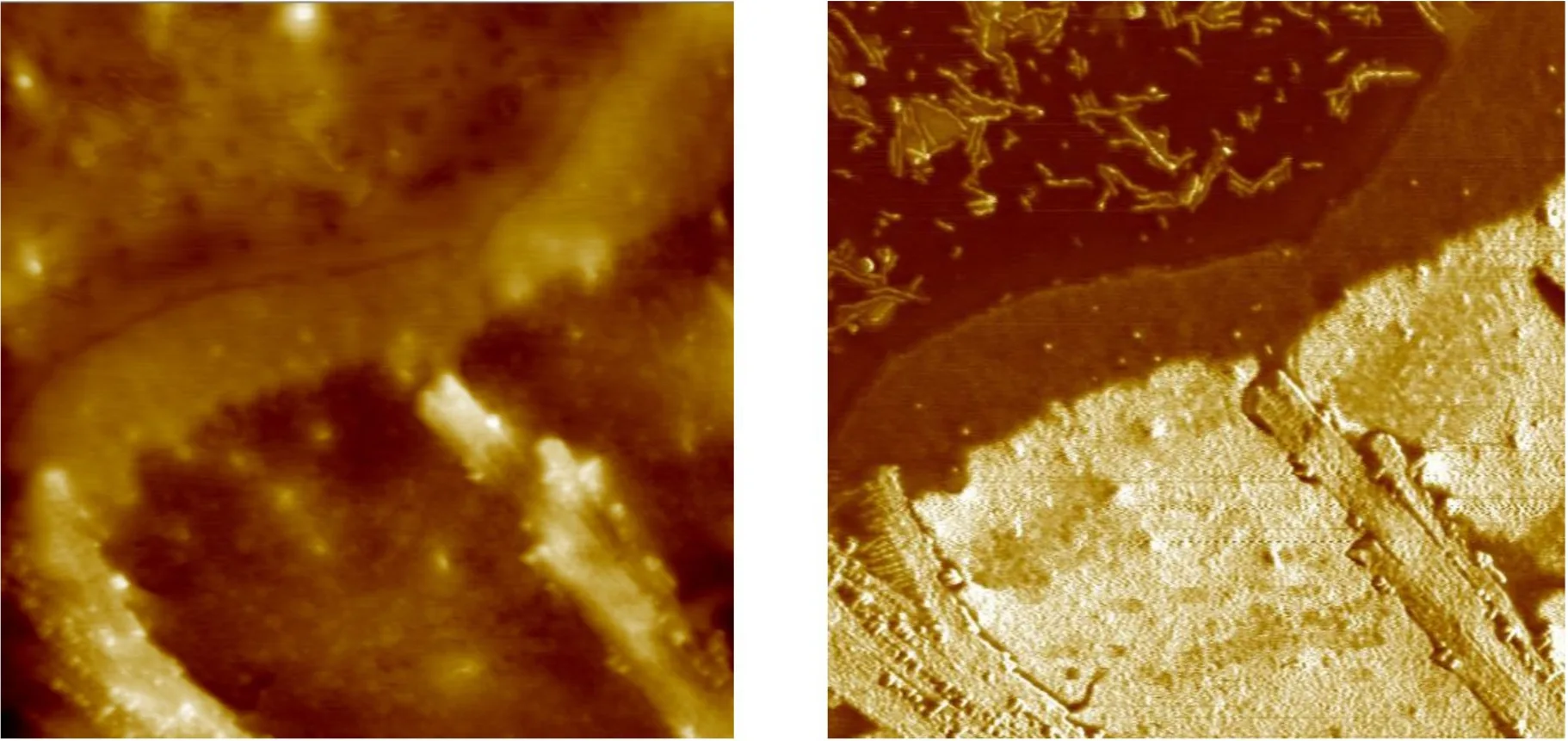
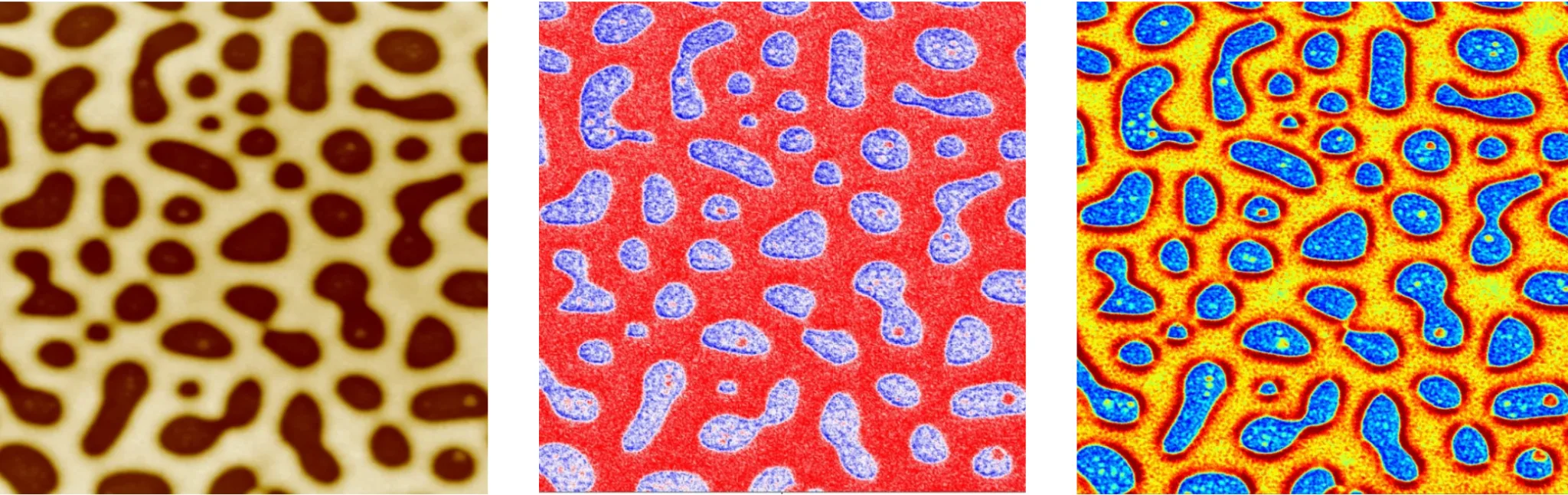
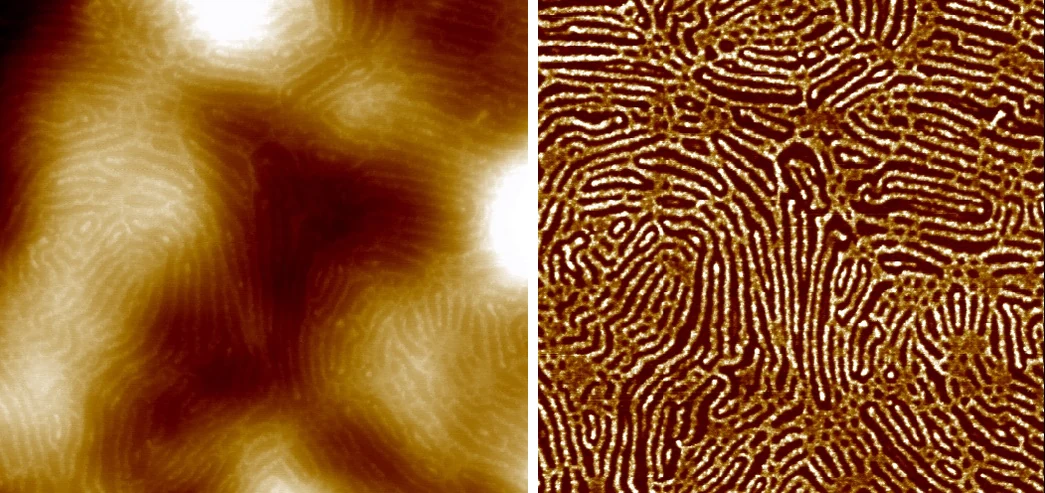
AFM phase imaging in Resonant Mode provides contrast between chemically or mechanically distinct phases in polymer blends without staining or chemical preparation. The AFM tip oscillates at or near resonance, and the phase lag between the drive signal and tip response varies with local energy dissipation and stiffness — producing phase contrast maps that distinguish hard (glassy) and soft (rubbery) domains. PS-PMMA blends, polyolefin blends, and rubber-toughened polymers are routinely characterized this way, providing domain size distributions, co-continuity, and interfacial width data directly relevant to blend processing and mechanical performance.
What is the advantage of Soft-IC mode for polymer mechanical measurements?
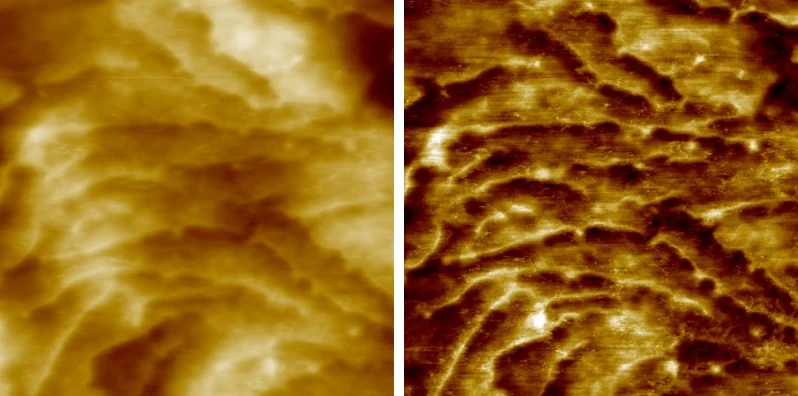
Standard contact mode AFM on soft polymers causes lateral tip dragging (friction), which damages the surface, distorts topography, and compromises quantitative mechanical measurements. Soft Intermittent Contact (Soft-IC) mode on the Nano-Observer II makes brief, controlled vertical contacts at each pixel with constant force, then fully retracts before moving to the next point — eliminating lateral friction entirely. This enables reliable stiffness, adhesion, and Young's modulus mapping (via Soft MEKA) on viscoelastic polymer surfaces, hydrogels, and biological polymer films that standard contact mode AFM would damage.
Can AFM characterize the electrical properties of conductive polymers?
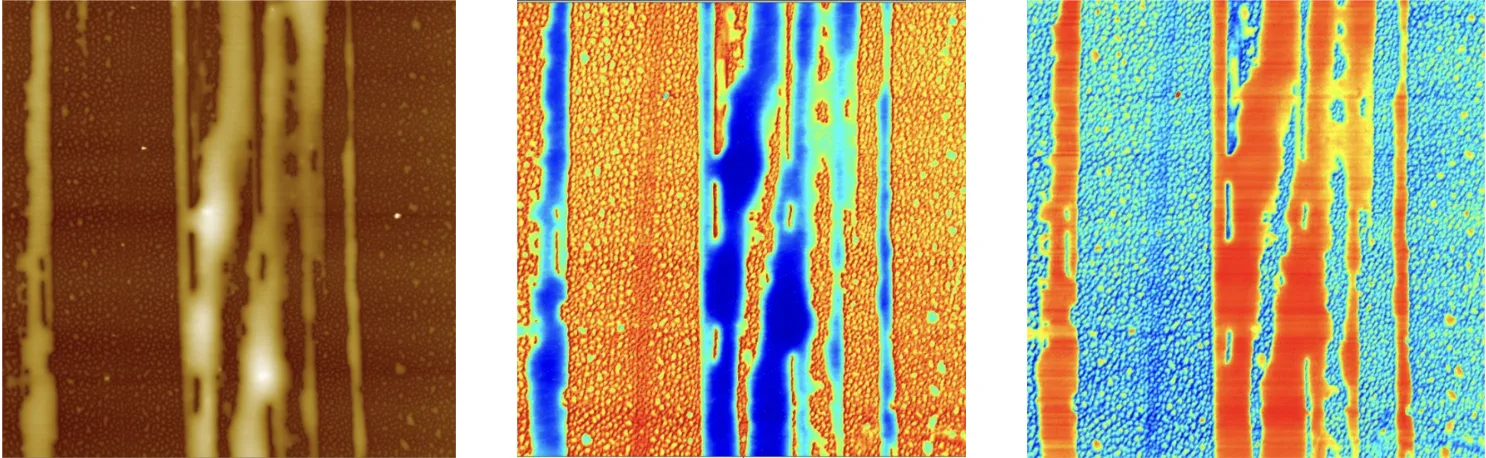
Yes. Soft ResiScope™ on the Nano-Observer II combines intermittent contact mode with resistance and current mapping, enabling quantitative electrical characterization of conductive polymer films (PEDOT:PSS, polyaniline, polypyrrole) and polymer composites (carbon nanotube or graphene-filled polymers) without mechanical damage. The 10-decade dynamic range (50 fA to 1 mA, 10² to 10¹² ohms) resolves both conductive polymer backbones and insulating domains in a single scan. HD-KFM can additionally map surface potential and work function across the same area.