
Animated story
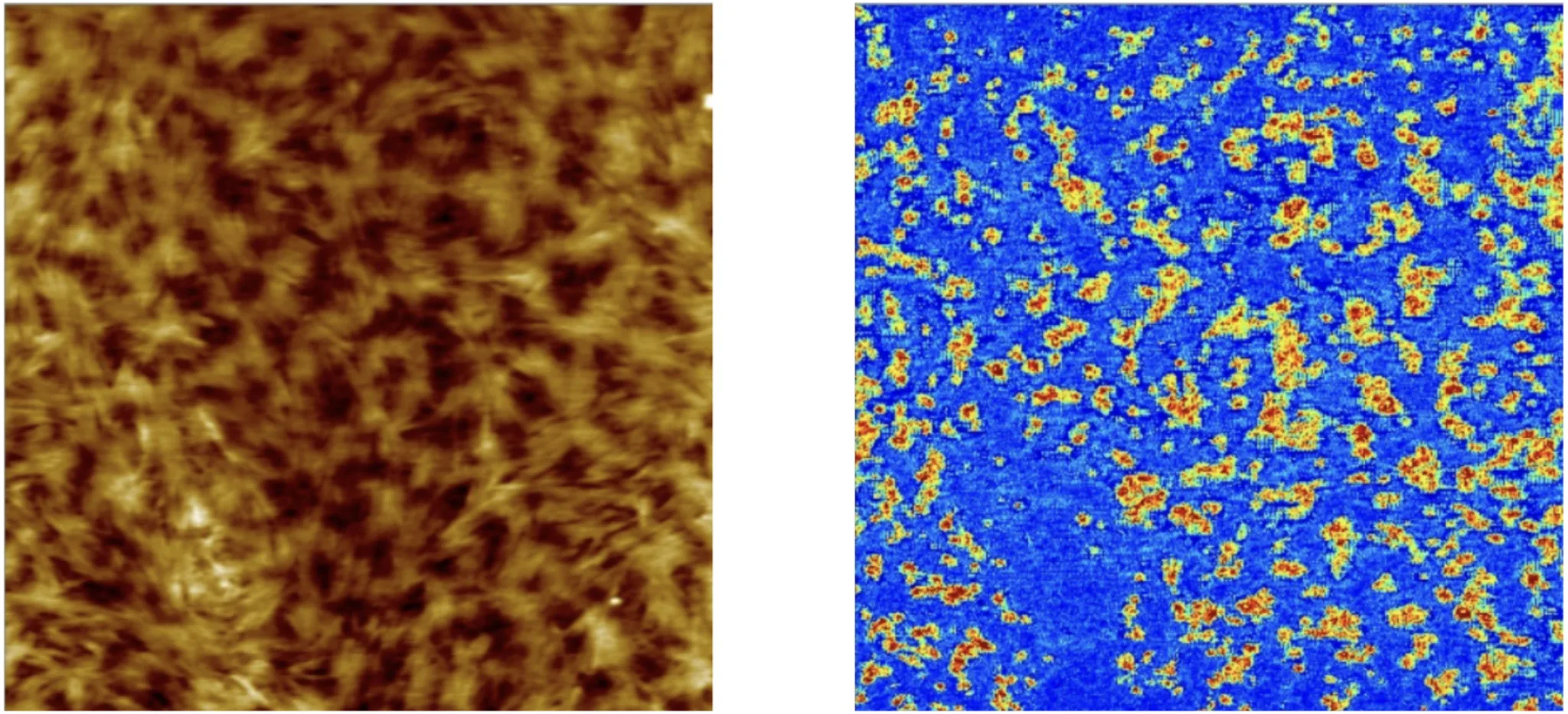
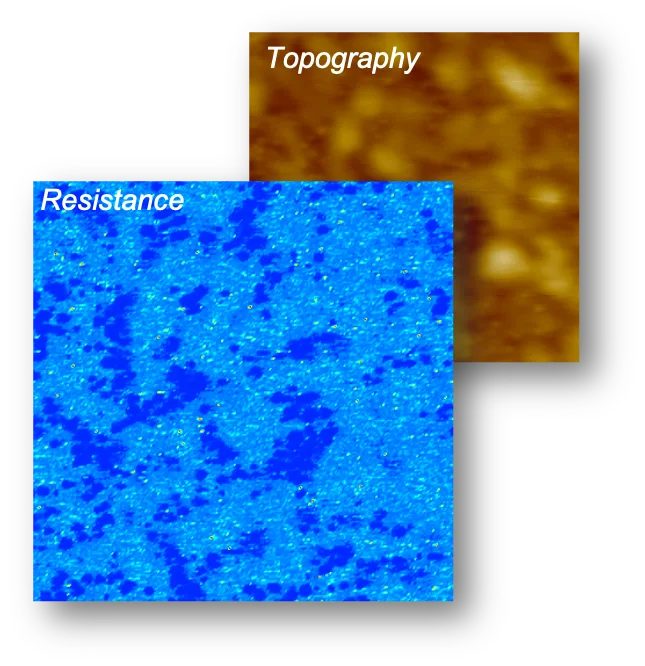
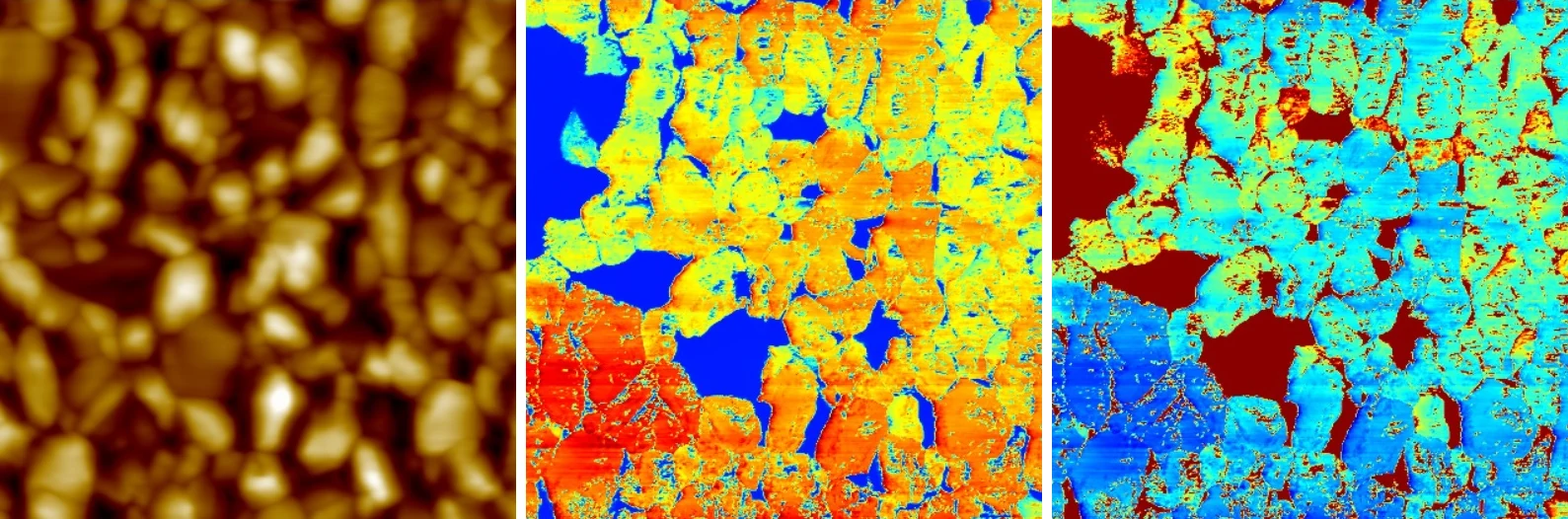
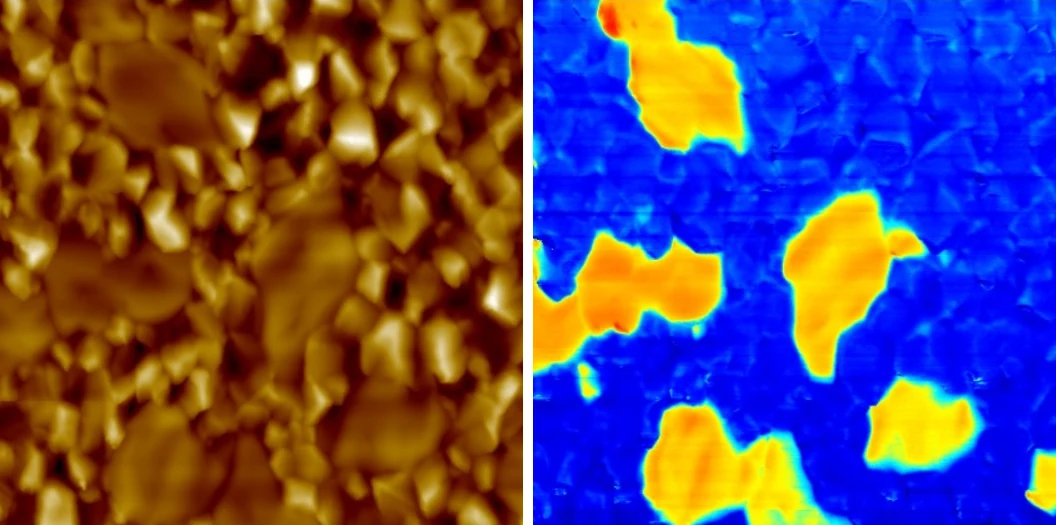
Battery electrodes: ResiScope™ vs C-AFM
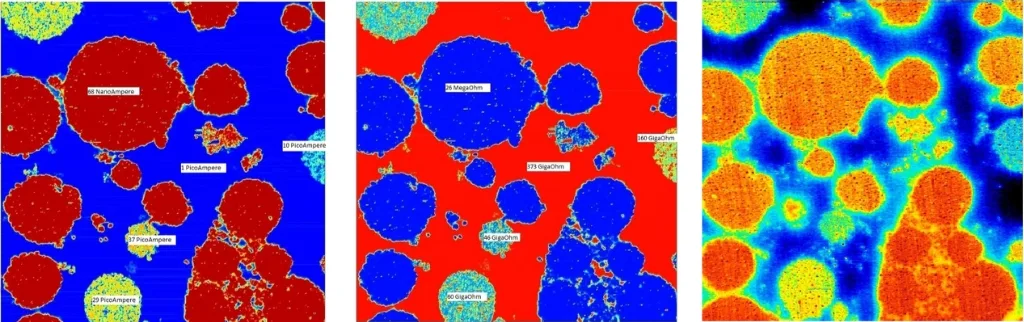
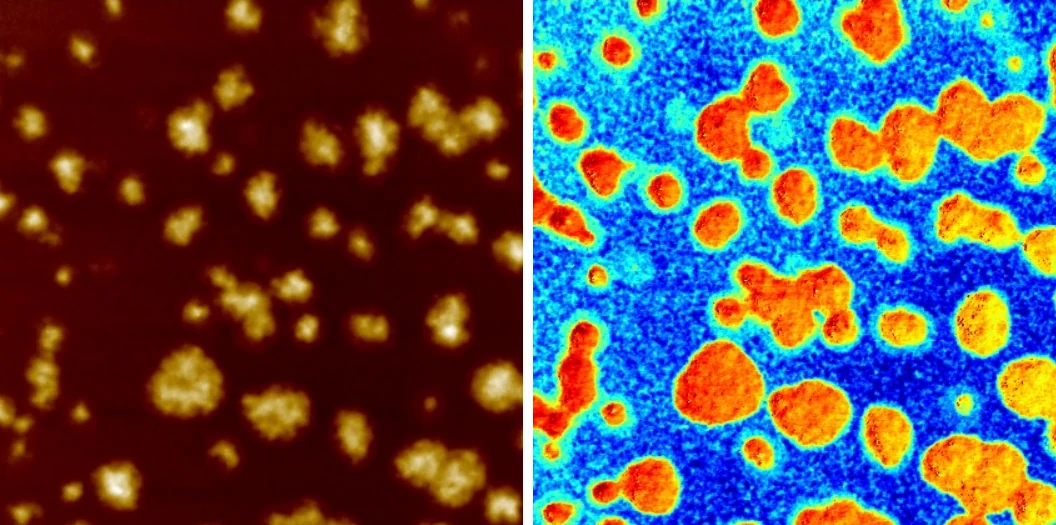
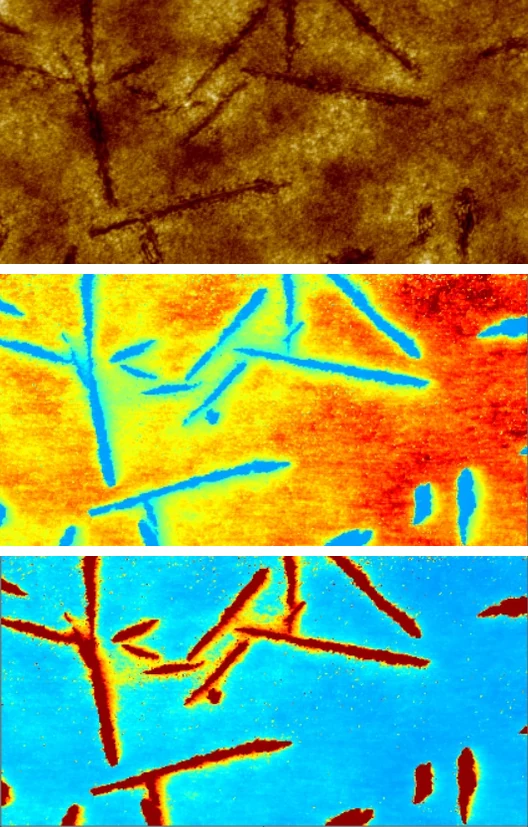
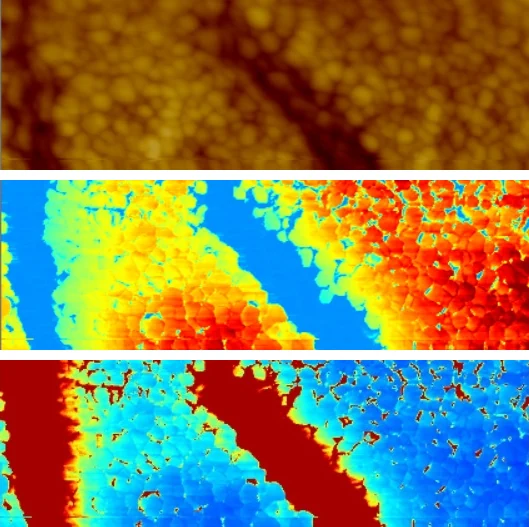
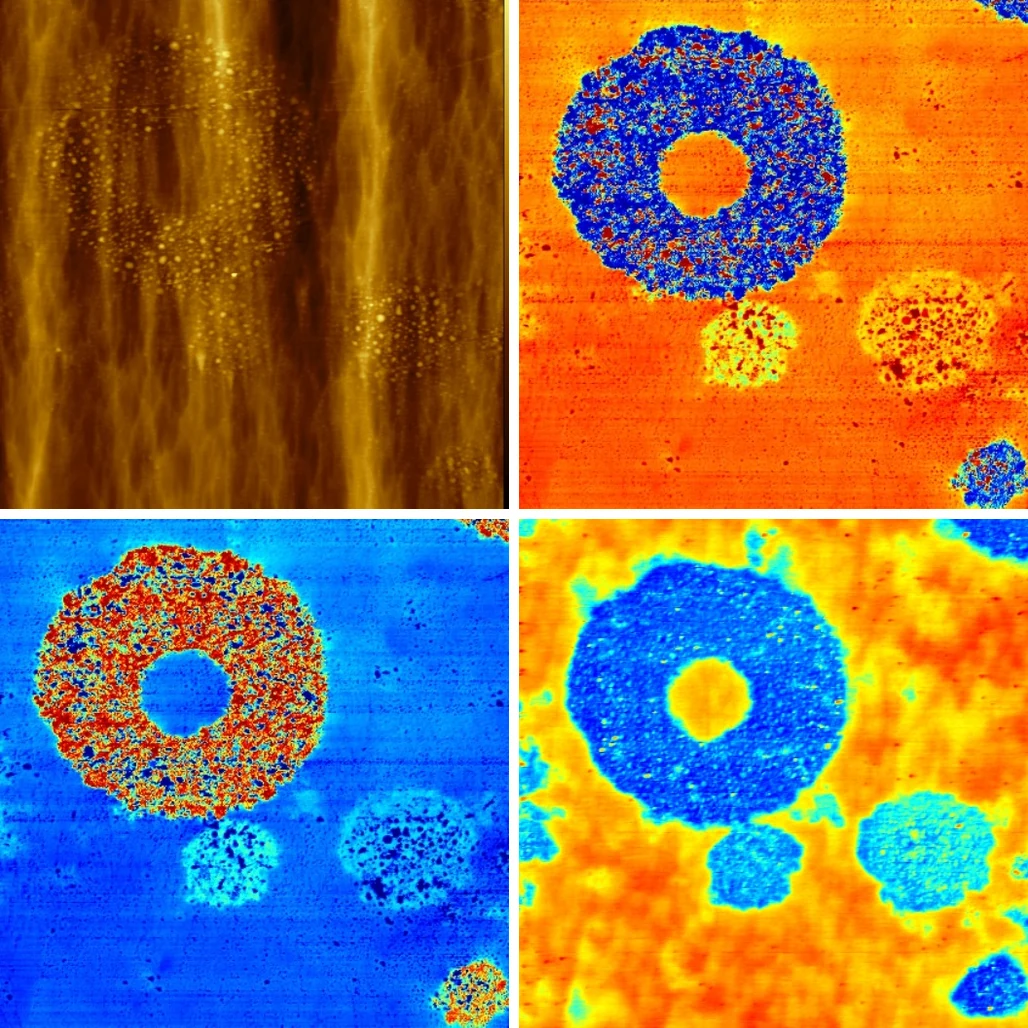
ResiScope maps clear conductivity from pA to µA; C-AFM saturates, adds capacitive effects and charges the surface.
01
The sample
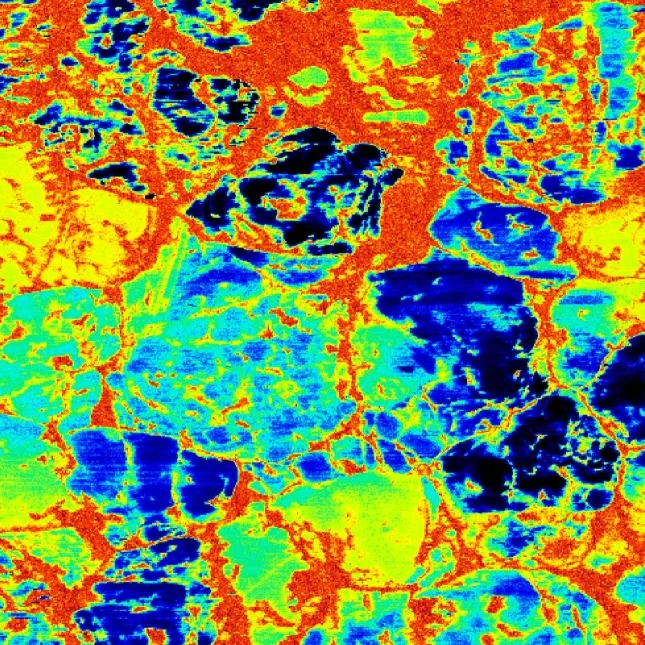
A composite electrode layer on its current collector — pA binder, µA particles.
02
One scan, six decades of current
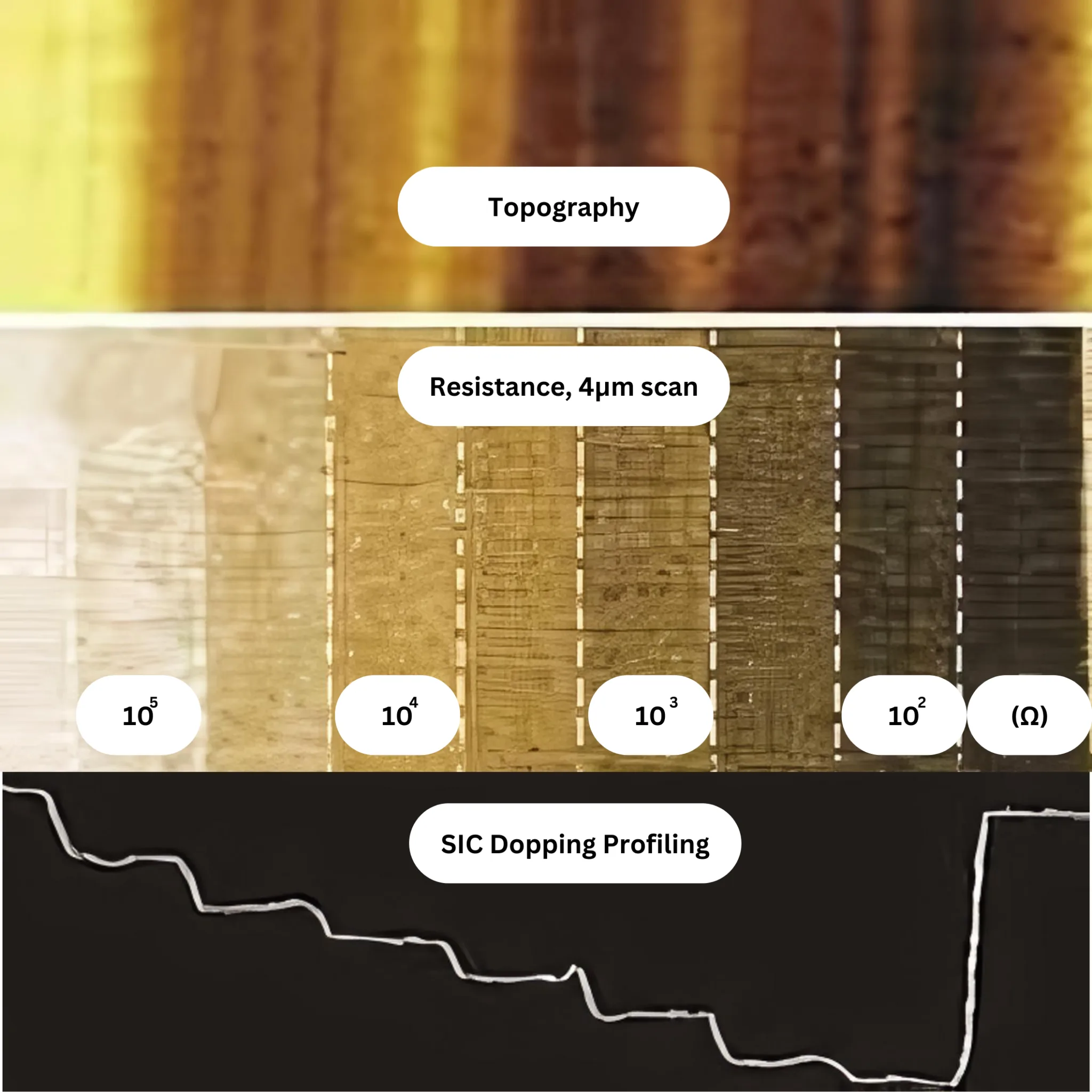
ResiScope follows the current across six decades.
03
A fixed range clips — and the surface charges
Saturation — every particle above 10 nA reads the same value.
04
The switch happens mid-scan
Soft Interaction Control: no shear, no scratching.
Images
Videos
Animated story
The same question, at the nanoscale
What a solar cell does under light depends on how the light arrives. Reproduce the angle, and you reproduce the condition — then measure the response where it happens, on the surface.
01
The same range the sun covers over a day
Irradiance follows the elevation, from 20° to 90°.
02
Reproduce the angle
…and you reproduce the condition the cell sees in the field.
03
The same sweep, on the microscope
Continuously adjustable on a graduated arc, locked at any angle onto the sample.