
Electrical AFM · Nano-Observer II & Galaxy Dual Controller
Kelvin probe and conductive AFM that read the whole sample
HD-KFM™ III maps topography and surface potential in a single pass. ResiScope™ III maps resistance from 10² to 10¹² Ω in one scan, where conductive AFM saturates. On a new Nano-Observer II, or on the AFM you already have.
Our application team tells you which mode fits your sample and can run test measurements on it. Or ask the CSI Guide: three quick questions.
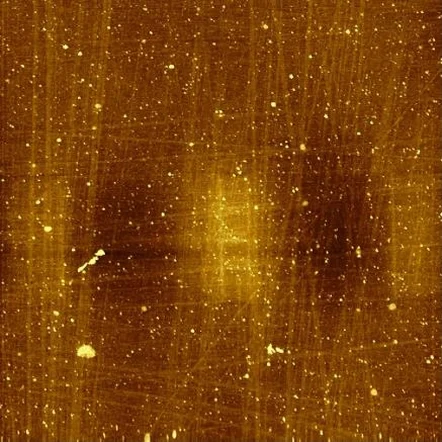 Topography
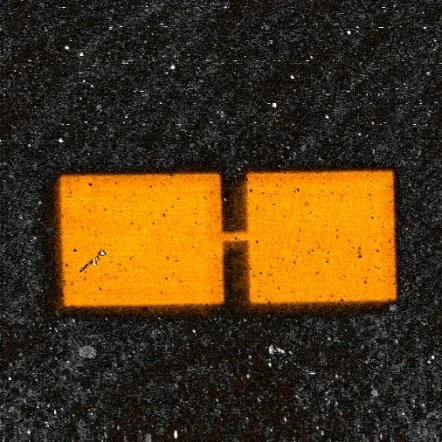 dC/dZ
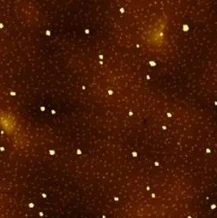 Topography
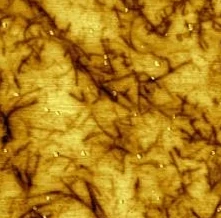 HD-KFM
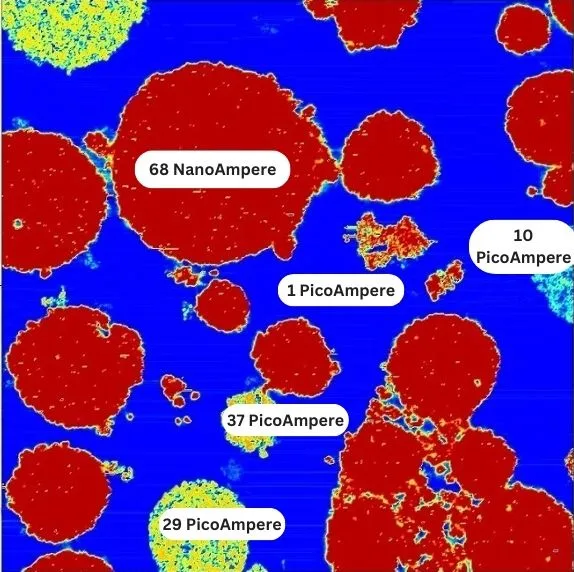
- 1 pass topography and surface potential
- 10² – 10¹² Ω in one ResiScope scan
- Your AFM too MultiMode, Dimension, Agilent, Keysight
- Les Ulis, France designed and built
Trusted by research labs and industry





Why it is different
Two limits of standard electrical AFM, removed
Surface potential · KPFM
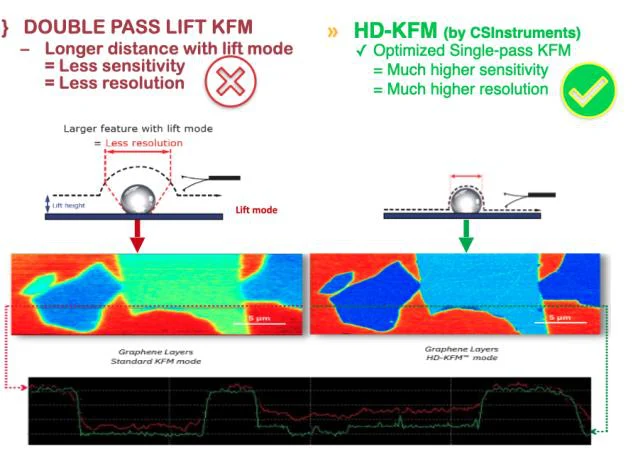
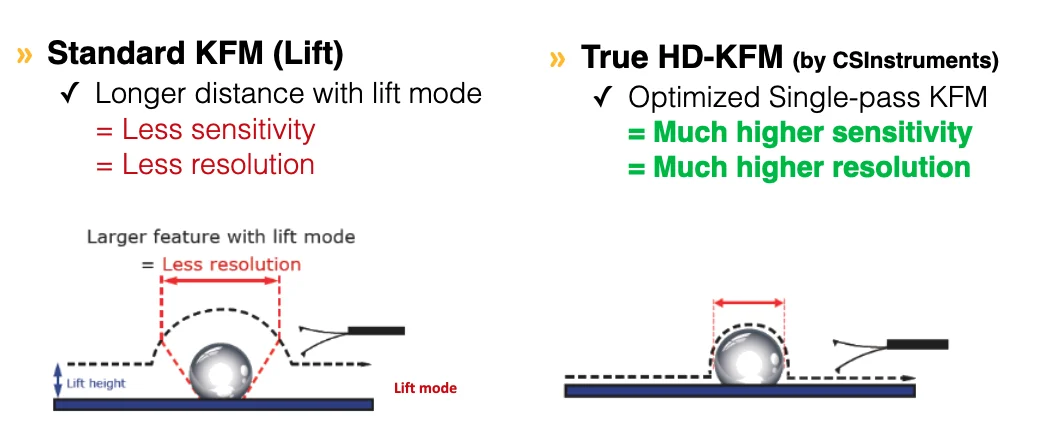
Single pass, not lift mode
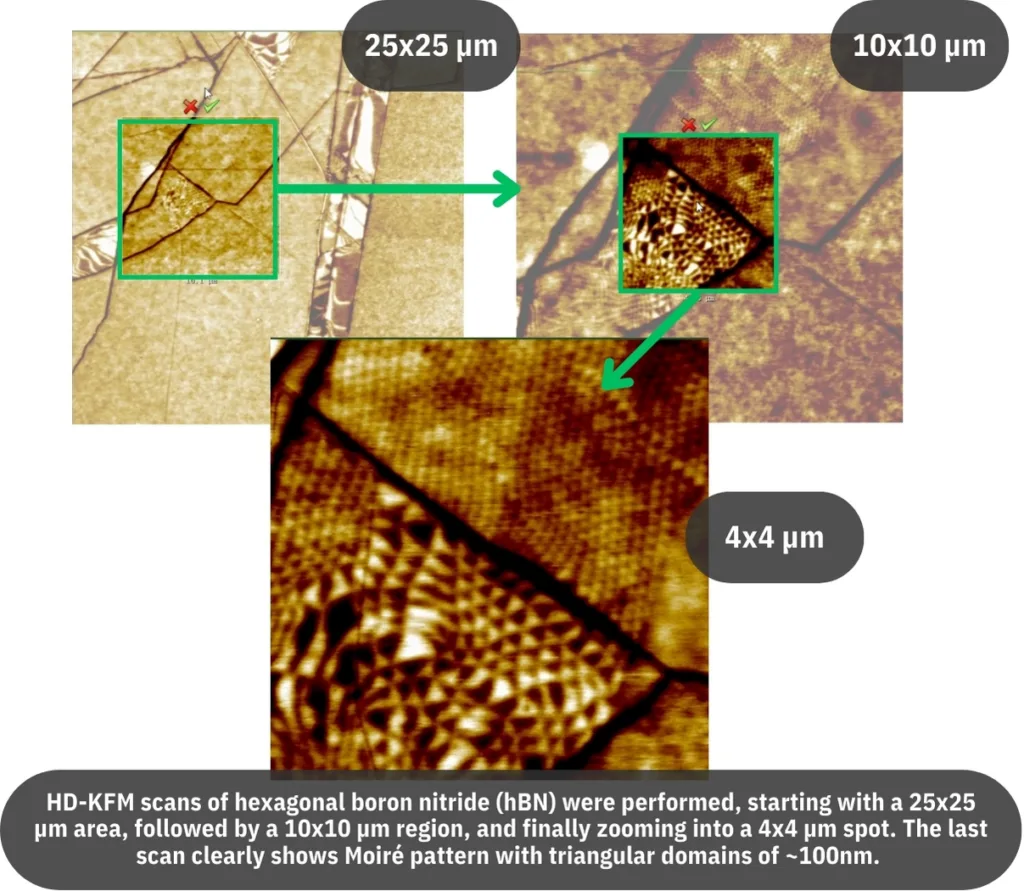
Lift-mode KPFM reads the potential on a second pass, tens of nanometres above the surface, so it averages and picks up the topography. HD-KFM™ III uses the cantilever’s second eigenmode and records topography and potential in the same pass, with the tip close to the surface.
Current · conductive AFM
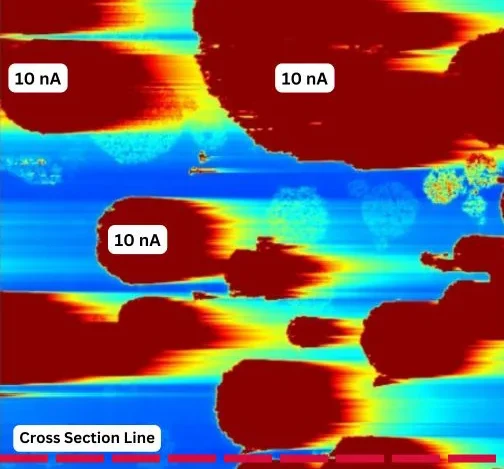
Ten decades, not one amplifier gain
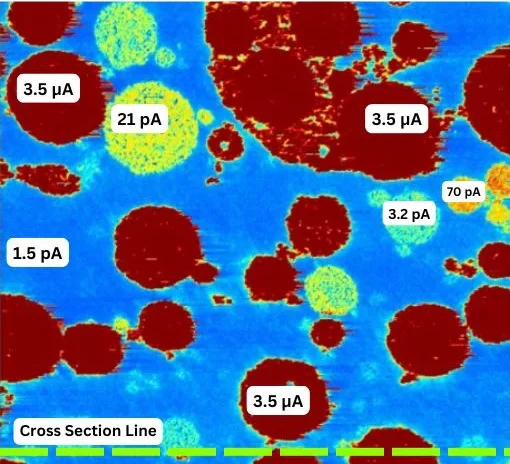
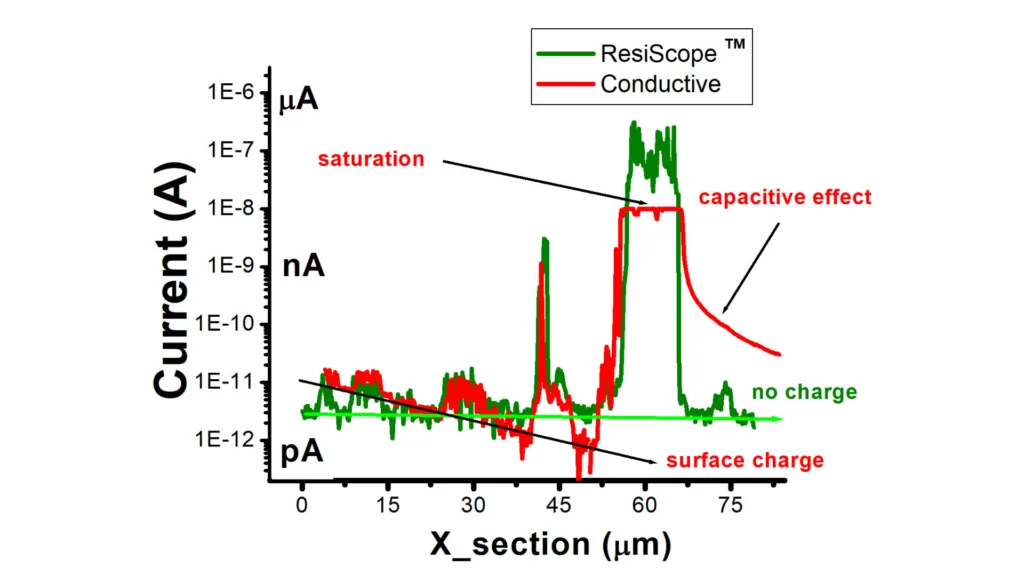
A conductive-AFM amplifier covers one slice of the current range. On this battery electrode it clips every conducting particle at 10 nA. ResiScope™ III adjusts its gain in real time and keeps every phase in range.
Your sample
What it shows on your material
Photocatalysts & oxides
Show where photogenerated charges go: surface potential across a heterojunction, measured in the dark and under light with the Nano-Observer II illumination arm.
What to measure on photocatalysts & oxides →Test it on my sample →Not sure which mode? Ask the CSI Guide →
Memristors & resistive switching
Follow a conductive filament from low leakage to the switched path, in one ResiScope™ scan, without changing range.
What to measure on memristors & resistive switching →Test it on my sample →Not sure which mode? Ask the CSI Guide →
2D materials
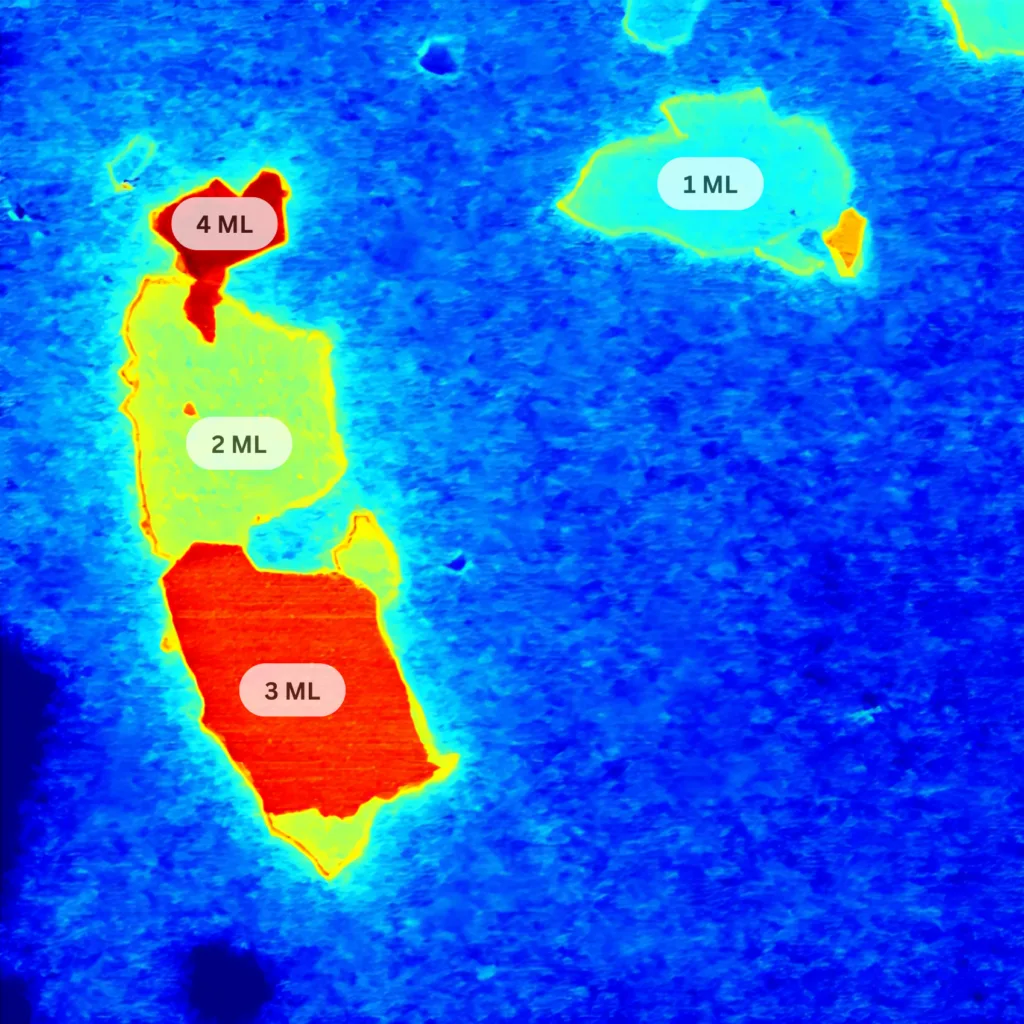
Layer number, doping and stacking read from the work function; conductivity of flakes, edges and contacts.
What to measure on 2d materials →Test it on my sample →Not sure which mode? Ask the CSI Guide →
Batteries & solid electrolytes
Conducting particles and insulating binder measured together, and soft electrodes measured without scratching.
What to measure on batteries & solid electrolytes →Test it on my sample →Not sure which mode? Ask the CSI Guide →
Perovskite & solar cells
Grain boundaries and interfaces: surface potential and local current, in the dark and under light.
What to measure on perovskite & solar cells →Test it on my sample →Not sure which mode? Ask the CSI Guide →
Semiconductors & power devices
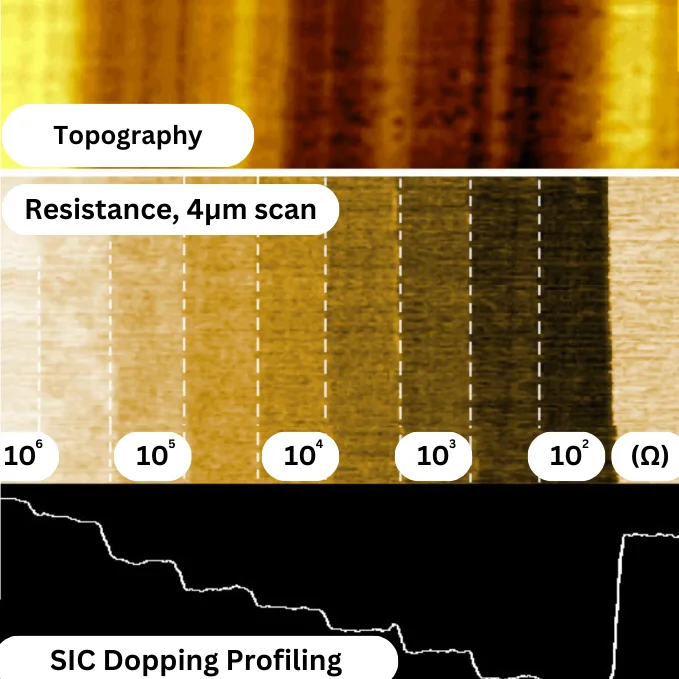
Dopant and junction profiles over ten decades of resistance (the measurement usually done by SSRM), and surface potential across junctions.
What to measure on semiconductors & power devices →Test it on my sample →Not sure which mode? Ask the CSI Guide →
Ferroelectrics
Polarisation domains and switching with PFM, surface charge with HD-KFM™ III.
What to measure on ferroelectrics →Test it on my sample →Not sure which mode? Ask the CSI Guide →
Polymers & organic layers
Conductivity of soft films with controlled force, surface potential, and mechanical contrast of blends.
What to measure on polymers & organic layers →Test it on my sample →Not sure which mode? Ask the CSI Guide →
Alloys & corrosion
Volta potential of phases, inclusions and intermetallic particles (scanning Kelvin probe, SKPM), with the topography.
What to measure on alloys & corrosion →Test it on my sample →Not sure which mode? Ask the CSI Guide →
The complete atomic force microscope
One AFM system for the whole lab, electrical modes included
The Nano-Observer II is a full research AFM: imaging, nanomechanics, magnetic, thermal and environmental modes on one head, with ResiScope™ III and HD-KFM™ III built in rather than added later.
- 100 × 100 µm XY scan range, closed loop
- 15 µm Z range
- 24-bit Galaxy USB controller, low noise
- 20+ modes on one head, upgradable
Magnetic, thermal & environment
MFMVariable-field MFMScanning thermal (SThM)TemperatureLiquidElectrochemistryGas / humidity
- AutoScan software automatic approach, real-time feedback gains, preset setpoints for soft, medium or hard samples
- Glovebox compatible compact head for air-sensitive batteries, perovskites and organic electronics
- Illumination arm light from 20° to 90° on the sample; open head for UV, IR and Raman
- AFM-IR and motorized stage chemical mapping with an IR source; 25 × 25 mm automated travel
New AFM or the one you have
Two ways to get these modes
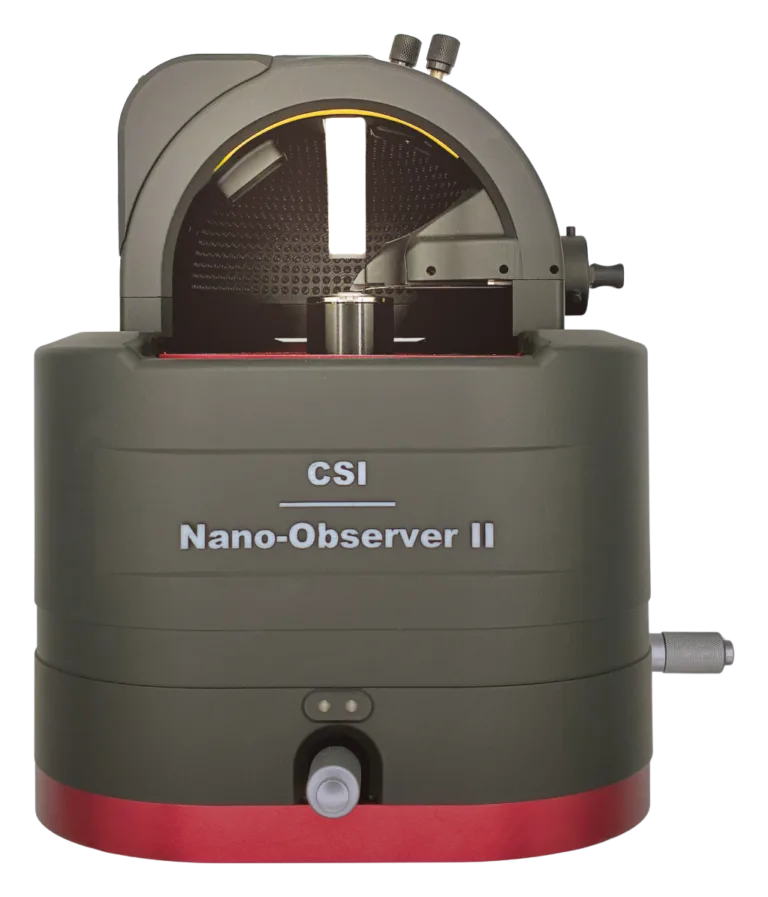 Nano-Observer IIA complete AFM: HD-KFM™ III, ResiScope™ III and Soft Interaction Control on one head, with sample illumination and the other CSI modes.See the Nano-Observer II →
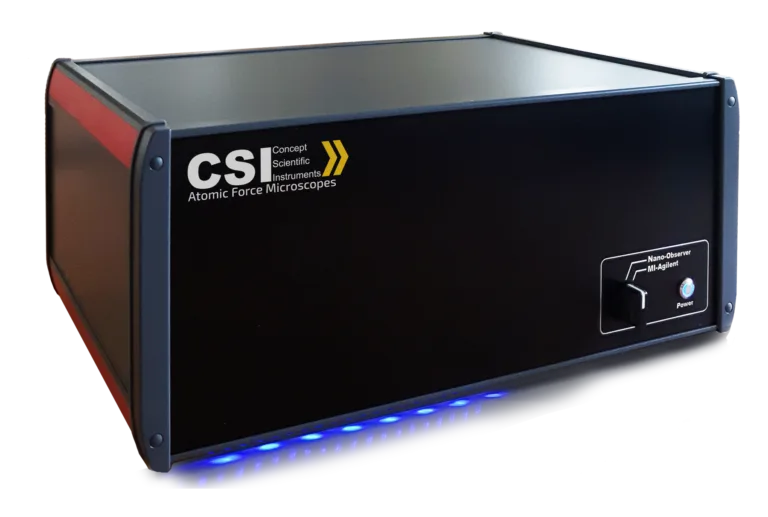 Galaxy Dual ControllerKeeps your Bruker MultiMode or Dimension, or your Agilent / Keysight AFM, and adds HD-KFM™, ResiScope™ and Soft IC.Upgrade my AFM →
What happens next
From your sample to a recommendation
- Tell us about your sampleThe material and what you need to measure, in a short form.
- Feasibility checkOur application team picks the mode and can run test measurements on your sample.
- Results and a proposalThe test results, and a Nano-Observer II or a Galaxy upgrade that fits your lab.
Or talk to us: info@csi-afm.com · +33 1 64 53 36 30
Application notes
The measurements, step by step
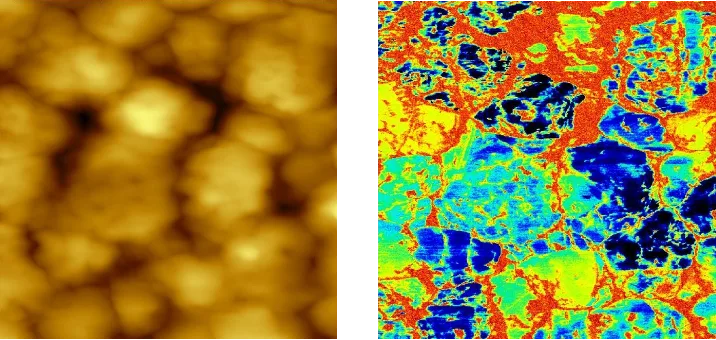
Perovskite solar cells
Where the photovoltage is gained and lost, grain by grain.
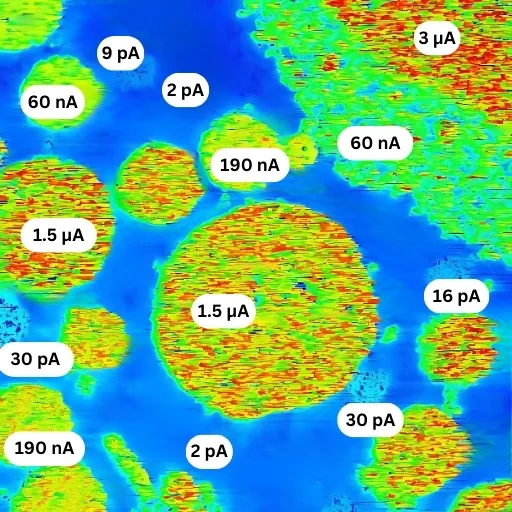
Battery electrodes
Conductivity and potential on the same electrode.
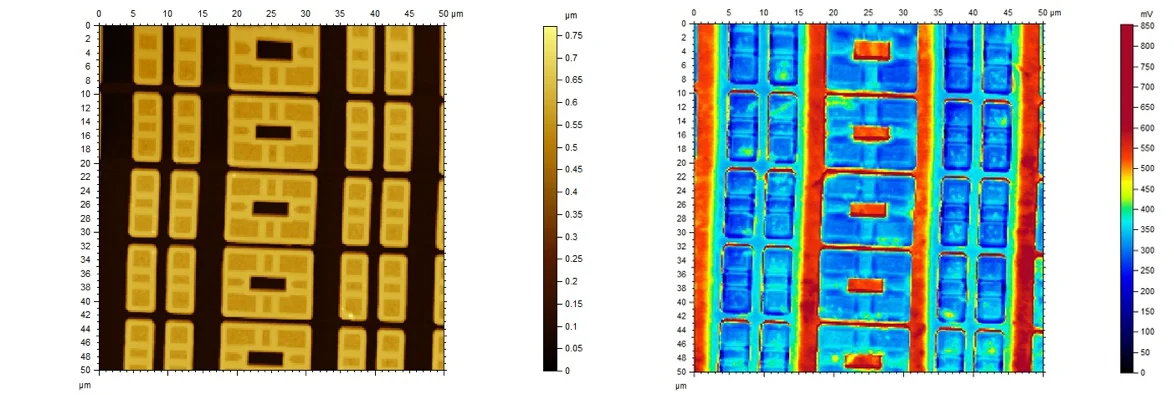
Semiconductor devices
SRAM, a silicon dopant staircase and VO₂ during heating.
FAQ
Frequently Asked Questions
What is the difference between KPFM and HD-KFM?
Standard KPFM often maps surface potential on a second pass, lifted above the topography line, so the potential is averaged and can pick up topographic artifacts. HD-KFM records topography and surface potential together, in one pass, using the second eigenmode of the cantilever. On graphene it separates one to four layers by their work function.
How is ResiScope different from conductive AFM?
Conductive AFM measures current and saturates when the sample spans a wide resistance range. ResiScope™ III covers 10² to 10¹² Ω in a single scan, so an insulating region and a conducting region of the same sample both stay in range.
Can HD-KFM and ResiScope be added to an existing AFM?
Yes. The Galaxy Dual Controller upgrades Bruker MultiMode and Dimension 3000/3100 AFMs, and Molecular Imaging, Agilent and Keysight 5100, 5400/5420, 5500, 5600LS and PicoSPM systems. It keeps the AFM’s existing modes and adds HD-KFM, ResiScope and Soft Interaction Control.
How much does an electrical AFM cost?
There is no public price list: the quotation depends on whether you need a Nano-Observer II or a controller upgrade, and on which modes you add. Send the measurement you need and the team replies with a quotation.
Can CSInstruments measure my sample before I buy?
Yes. Send a short description of the material and the measurement — surface potential, resistance, or both — and the application team recommends a mode and can run test scans.
Request a quote
Tell us the measurement — surface potential, resistance, or both — and the material. If you already have an AFM, name the model. We reply with the mode and the system that fits.